Message Forum


go to bottom 
  Post Message
  
    Prior Page
 Page  
Next Page      

09/01/14 10:30 AM #901    


David Buchholz

In Inventions I Wish I'd Thought of but Didn't Department...

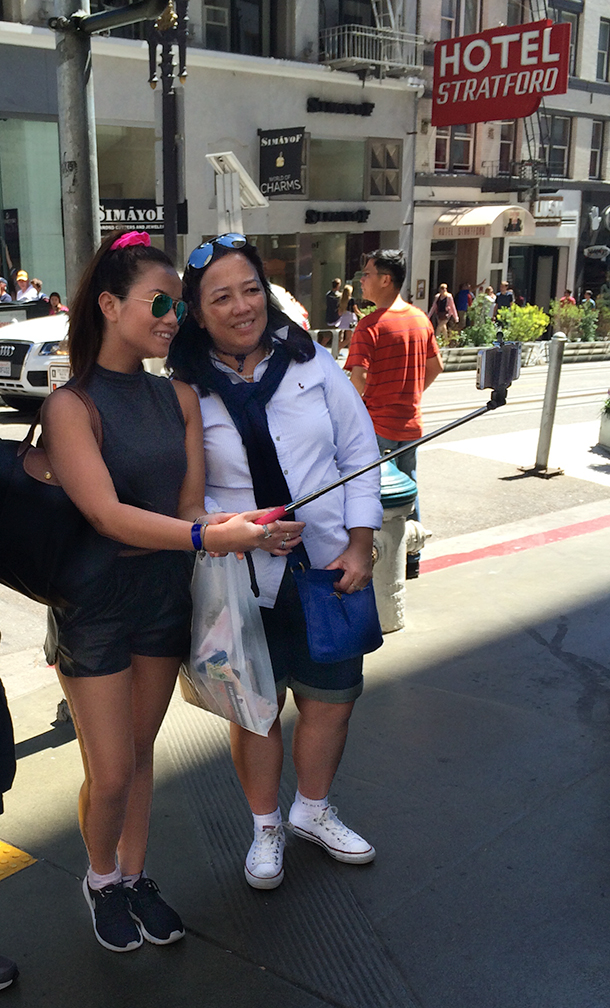
The Selfie Extender


SF 8/31/14 w/ iPhone


09/01/14 10:43 AM #902    


Ann Shepard (Rueve)

Phil I can ABSOLUTELY answer the question without looking it up.  A little history, my maternal grandfather, a Presbyterian minister, was living in Fayetteville, NC. The Lane Seminary, which was his alma mater and which had a branch in Walnut Hills on Gilbert Avenue, called him. They were going to found a Presbyterian church for descendants of Africans in Cincinnati, the Carmel Presbyterian Church.  They brought him and his wife and six children to Cincinnati 1905.  They initially lived in Westwood, but with their growing family, a boy born in 1908 and my mother born in 1912 (it's another story that my grandmother was 45 and grandfather was 65 at the time), they bought a house on Mathers St. in Walnut Hills.  

My mother used to tell me about how she and my Uncle Dick played cowboys and indians in the woods near her house and also when they built the new parkway along the old Bloody Run. ( I may add that Procter and Gamble should have jumped on that connection when they were developing feminine hygiene products .)


09/01/14 01:51 PM #903    


Stephen (Steve) Dixon

"What was Victory Parkway's original name?"

It wasn't "Everybody-gets-a-trophy Avenue" was it?


09/01/14 02:50 PM #904    


Stephen (Steve) Dixon

A list worth contemplating? Stewart Brand's list of "76 Books to Sustain and Rebuilt Humanity."

One cricism I read was that it is, once again, a "white male" list (i.e. only one authored by a woman with one female co-author, and decidedly Euro & New World centric). Still, it is a good place to start.

there are a number of other notable reading lists (Carl Sagan, Alan Turing).

  1. Dirt: The Erosion of Civilizations by David R. Montgomery
  2. Meditations by Marcus Aurelius
  3. The Odyssey by Homer translated by Robert Fagles
  4. The Iliad by Homer translated by Robert Fagles
  5. The Memory of the World: The Treasures That Record Our History from 1700 BC to the Present Day by UNESCO
  6. The History of the World in 100 Objects by Neil MacGregor
  7. The Landmark Herodotus: The Histories edited by Robert B. Strassler
  8. The Landmark Thucydides: A Comprehensive Guide to the Peloponnesian War edited by Robert B. Strassler
  9. The Complete Greek Tragedies, Volumes 1-4 edited by David Grene and Richmond Lattimore
  10. The Prince by Machiavelli, translated by George Bull, published by Folio Society
  11. The Nature of Things by Lucretius
  12. The Art of the Long View: Planning for the Future in an Uncertain World by Peter Schwartz
  13. The Way Life Works: The Science Lover’s Illustrated Guide to How Life Grows, Develops, Reproduces, and Gets Along by Mahlon Hoagland and Bert Dodson
  14. Venice, A Maritime Republic by Frederic Chapin Lane
  15. The Western Canon: The Books and School of the Ages by Harold Bloom
  16. The Map Book by Peter Barber
  17. Conceptual Physics by Paul G. Hewitt
  18. The Encyclopedia of Earth: A Complete Visual Guide by Michael Allaby and Dr. Robert Coenraads
  19. The Foundation Trilogy by Isaac Asimov
  20. Star Maker by Olaf Stapledon
  21. The Gift: Imagination and the Erotic Life of Property by Lewis Hyde
  22. Powers of Ten: About the Relative Size of Things in the Universe by Philip Morrison and Phylis Morrison
  23. The Elements: A Visual Exploration of Every Known Atom in the Universe by Theodore Gray
  24. The History of the Decline and Fall of the Roman Empire (6 Volumes) by Edward Gibbon
  25. The Complete Guide to Trail Building and Maintenance by Carl Demrow and David Salisbury
  26. Collapse: How Societies Choose to Fail or Succeed by Jared Diamond
  27. A Pattern Language: Towns, Buildings, Construction by Christopher Alexander, Sara Ishikawa and Murray Silverstein
  28. Thinking, Fast and Slow by Daniel Kahneman
  29. The Better Angels of Our Nature: Why Violence Has Declined by Steven Pinker
  30. Triumph of the City: How Our Greatest Invention Makes Us Richer, Smarter, Greener, Healthier, and Happier by Edward L. Glaeser
  31. The Causes of War by Geoffrey Blainey
  32. Military Misfortunes: The Anatomy of Failure in War by Eliot A. Cohen and John Gooch
  33. A Short History of Nearly Everything: Special Illustrated Edition by Bill Bryson
  34. The Past From Above: Aerial Photographs of Archaeological Sites edited by Charlotte Trümpler
  35. Turing’s Cathedral: The Origins of the Digital Universe by George Dyson
  36. Why the West Rules–for Now: The Patterns of History, and What They Reveal About the Future by Ian Morris
  37. The Rise of the West: A History of the Human Community by William H. Mcneill
  38. A History of Civilizations by Fernand Braudel
  39. The Pattern on the Stone: The Simple Ideas that Make Computers Work by Daniel Hillis
  40. Imagined Worlds by Freeman Dyson
  41. The Story of Writing: Alphabets, Hieroglyphs & Pictograms by Andrew Robinson
  42. Brave New World (The Folio Society) by Aldous Huxley and illustrated by Leonard Rosoman
  43. Dune by Frank Herbert
  44. The Singularity is Near: When Humans Transcend Biology by Ray Kurzweil
  45. Infinite in All Directions: Gifford Lectures Given at Aberdeen, Scotland April–November 1985 by Freeman J. Dyson
  46. What Technology Wants by Kevin Kelly
  47. The Player of Games by Iain M. Banks
  48. Consider Phlebas by Iain M. Banks
  49. Look to Windward by Iain M. Banks
  50. State of the Art by Iain M. Banks
  51. Use of Weapons by Iain M. Banks
  52. Excession by Iain M. Banks
  53. Across Realtime by Vernor Vinge
  54. The Discoverers: Volumes I and II Deluxe Illustrated Set by Daniel J. Boorstin
  55. Governing the Commons: The Evolution of Institutions for Collective Action by Elinor Ostrom
  56. The Clash of Civilizations and the Remaking of World Order by Samuel P. Huntington
  57. The Idea of Decline in Western History by Arthur Herman
  58. Thinking in Time: The Uses of History for Decision Makers by Richard E. Neustadt and Ernest R. May
  59. Finite and Infinite Games: A Vision of Life as Play and Possibility by James P. Carse
  60. One True God: Historical Consequences of Monotheism by Rodney Stark
  61. The Future of Life by Edward O. Wilson
  62. The Coming Population Crash: And Our Planet’s Surprising Future by Fred Pearce
  63. Gaia: A New Look at Life on Earth by James Lovelock
  64. The Long Summer: How Climate Changed Civilization by Brian Fagan
  65. Medieval Civilization by Jacques Le Goff
  66. The Civilization of the Middle Ages: A Completely Revised and Expanded Edition of Medieval History by Norman F. Cantor
  67. Guns, Germs, and Steel: The Fates of Human Societies by Jared Diamond
  68. The Eternal Frontier: An Ecological History of North America and Its Peoples by Tim Flannery
  69. The Epic of Gilgamesh translated by Andrew George
  70. Beowulf: A New Verse Translation by Seamus Heaney
  71. How Buildings Learn: What Happens After They’re Built by Stewart Brand
  72. Grand Design: The Earth from Above by Georg Gerster
  73. The Complete Oxford Shakespeare: Histories, Comedies, Tragedies (Three volume set)
  74. The Merck Manual Home Health Handbook by Robert Porter
  75. Lao Tzu’s Te-Tao Ching — A New Translation Based on the Recently Discovered Ma-wang-tui Texts by Lao Tzu and translated by Robert G. Henricks
  76. The King and the Corpse: Tales of the Soul’s Conquest of Evil by Heinrich Zimmer edited by Joseph Campbell

09/01/14 03:46 PM #905    


Stephen (Steve) Dixon

We are, most of us, at that stage in life where our careers are winding down. Or over. However, if you had Mr. Peabody's Wayback Machine and could have your working life in front of you, would you choose to be successful, or to be significant?

To be James Joyce, or Dan Brown?

To be Bill Gates, or Leonardo Pisano (aka Fibonacci)?

To be the creator of the "Self-Contained Underwater Breathing Apparatus" (Cousteau), or to be the creator of Twitter?


09/01/14 04:59 PM #906    


Philip Spiess

Stephen:  Apparently, it's "Ann-Always-Gets-the-Trophy Parkway"; she's gotten the last two challenges correct.  Yes, Ann, it was "Bloody Run Parkway" (evidently after an old Indian massacre), but was changed during World War I as sounding too militaristic.  And yes, Lane Seminary was in Walnut Hills; it was the brainchild and headquarters of the Beecher clan, those notorious Abolitionists:  Rev. Lyman Beecher and his brood -- Catherine Beecher, Harriet Beecher Stowe, Rev. Calvin Stowe, Rev. Henry Ward Beecher, Thomas Beecher, et al. -- and the breeding ground for the hot-headed young abolitionists who broke with Beecher and Lane Seminary and went north to found Oberlin College.

Steve, I don't know what it says about me, but I picked significant over successful, and then every further choice I made in your list turned out to be the successful guy over the significant one.  Maybe I want to be "significantly successful" -- like the guy who came up with the "Selfie Extender," which Dave shows.  (Many of us have a "selfie extender," but I won't go into that.)


09/01/14 05:19 PM #907    


Philip Spiess

One seminal work (you should pardon the phrase) not on your book list, Steve, is How They Do It, an eye-opening treatise on how various animals and insects have sex.  Aside from the horrors of mating with a female Praying (Preying) Mantis and a regrettable photograph of mating elephants, this little gem proves, to the human mind at least, that Nature in the wild is really f**ked up!


09/01/14 06:21 PM #908    


David Buchholz

Steve, I'm glad you brought up the question, as answering it pretty much reflects my post WHHS life.  I only picked up my first camera in 1969 and immediately fell in love with photography.  After a stint in the Peace Corps and my marriage I decided I wanted to be SIGNIFICANT, so I applied to the Rhode Island School of Design.  I didn't get in.  I spent a year in Middletown, selling furniture at the Wholesale Furniture Depot, trying to become a better photographer, while my wife pursued her Master's at Miami. I hoped that I could make a second run at RISD.  I didn't get in the second time, either.  RISD prepares photographers for a life of poverty but SIGNIFICANCE.  Graduates are artists, and artists don't make any money.

Temporarily discouraged I went to Miami, too, then picked up my Masters and taught HS English for eight years, the first three at Talawanda HS in Oxford, the last five in Santa Rosa.  Discouraged not with teaching but with my $14,500 a year salary, having a mortgage and three kids, I quit and turned to trying to make a living at photography, first trying to sell art prints (good luck), then portrait photography, meaning high school senior portraits, weddings, proms, families, etc.,  I was successful.  Artistically insignificant, but successful.  After seeing the PBS documentary last night on perhaps the most remarkable and significant photographer of the twentieth century, Dorothea Lange, I have had to come to grips with being content with my success.

The kind of SIGNIFICANCE that you're describing is sometimes out of reach.  My essay a few pages earlier was about coming to grips with making peace on the road more traveled.


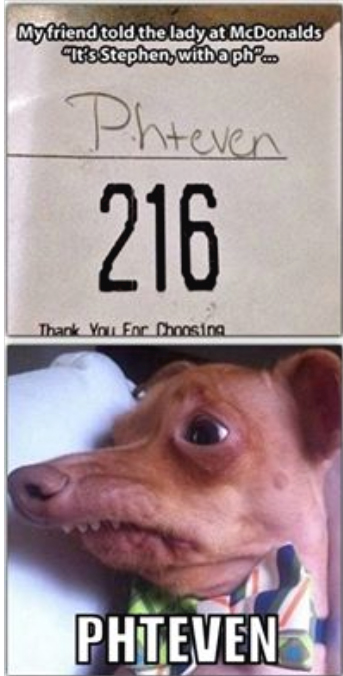
P.S.  Stephen, I've mentioned that I can't leave a post without a photograph.  This one is for you:

09/02/14 10:41 PM #909    


Philip Spiess

Uh-oh, Dave!  Your story doesn't start well.  I have no desire to raise the spectre of the Nazis (as so many do these days, at the drop of a hat), but Hitler twice was turned down for admittance by the leading art school in Vienna, reducing him to painting postcards.  So maybe Providence just didn't have RISD in the cards for you.  But you seem to have thrived well enough since.


09/03/14 02:11 PM #910    


Stephen (Steve) Dixon

I like the Phteven photo, Dave. 


09/03/14 06:09 PM #911    


Susan Patterson (Schramm)

Just got the email from Dick Winter regarding weekly "Chatterbox 63-64" editions!  What a great idea...it will certainly be a trip down Memory Lane.  This committee ROCKS!  Thank you Dick, et al.


09/03/14 06:41 PM #912    


Gail Weintraub (Stern)

Thank you, Susan.

The committee who made our 50th Virtual Reunion Chatterbox release a reality: Larry Klein, Sally Fox Korkin, Rick Steiner, Gail Weintraub Stern and Richard Winter.

We hope that you enjoy reading the weekly editions of the Chatterbox. It is another way to revisit our WHHS senior year. Happy 50th Virtual Reunion!


09/04/14 09:52 AM #913    


David Buchholz

First, thanks to the committee for posting the Chatterbox.  Great.  That was our senior year, the only year I went to Burlingame HS along with my friend, Caspar Weinberger Jr.  I spent a night or two at his house in Hillsborough.  I knew that the family was wealthy, but that was all.

Second.  I was hoping that Phteven's provocative post about significance and success would entice more to enter the discussion.  I'll echo Nelson's post of a few weeks ago, hoping that others will join in and reawaken the message forum.

And last...failing that, I still have about 35,000 photos left to post.  I put this up on Facebook and thought it would be worthwhile sharing.

Ha Long Bay, North Vietnam.  When our daughter Jennifer graduated from UCSB she told us that she was going to Asia to explore, leaving California late summer at twenty-one.  We figured that she’d be back by Christmas.  When that didn’t happen, we had to see for ourselves how she was doing, choosing a midwinter visit to Hanoi.  Jennifer had ridden up the Ho Chi Minh trail on a motorbike, stopping for lunch at a little village called “My Lai,” learning history firsthand.  She lived for close to month in virtually every country in Asia, including Myanmar at age 22. We spent a day on Ha Long Bay, a magical place, but one that was so heavily mined by the US Navy during what the Vietnamese called “The American War” that it remains hazardous to shipping even today.


09/04/14 11:23 AM #914    


Judy Holtzer (Knopf)

Seeing the world through your camera lens is certainly an adventure. What a bizarre-looking background to this last picture. It doesn't look real, but painted. And faintly nightmarish.....


09/04/14 11:52 AM #915    


Judy Holtzer (Knopf)

Sorry I didn't respond earlier about remarks about my dog BG. About getting him into the safe room at the air-raid siren, I was relying entirely on Pavlov: hear signal, do a task, get reward. He was fine up to a time when I was not home for a month, and there were several missiles on Beer Sheva. I was frantic, but could not leave where I was to go home to him. I have no idea of what went on, since I had a house/dog/garden sitter, but she did of course leave the house to go to school and whatever.... after that, he was a changed dog and no reassuring from me seems to help get back his trust.

And Ann, or anyone else, if you have any ideas, ANY at all, about this next doggie thing, I would be greatful. BG got so used to my being home every day, all day, that now, when I can go out if I feel well enough, when I come back, there are "signs" on the floor that BG was either very stressed by my leaving (sometimes only for less than half hour) or was angry that I left him. No amount of "BAD dog!!" moves him....


09/04/14 01:54 PM #916    


Ann Shepard (Rueve)

Phteven - I don't know if I read your reponse to your question.  

You gave examples of significant and successful.  I find my answer is that I really don't want to, or consider a "do over".  I think of myself as significantly successful.  It may not be on a large scale such as a Gates or a Cousteau, but ask one of the patients I have volunteered to serve at the hospital, or the heartbroken people who attend my pet loss support groups. Hopefully, they will concur with me.

Gail - Cudos to the committee. Brilliant idea about the Chatterbox.  I'll look forward to Fridays.

Dave - You're on Facebook?!  You shouldn't have mentioned that.  Send me a Friend Request (or anyone else in the class who hasn't "Friended" me already). Your picture of Vietnam brings back memories.  Although I wasn't there physically, I was the sweeetheart of a Marine who was there, and who (to this day) tells me that I actually was there with him when he was based at Chu Lai.  I'm certain that Larry and Nelson and the scores of other vets in our class will want to comment on your picture.  I don't find it as frightening as Judy, but hauntingly beautiful.

Judy - Obviously BG associates something negative with your room.  Something happened that we will never understand, but keep at your rewarding positive behaviors to have him take steps closer to the room.  Nancy Messer referred to the term "lumping", which is a term that I got form a Facebook group I belong to  of trainers who use Positive Reward (+R) training only. "Lumping" refers to putting too many small steps together while training and expecting the dog to get the end result before mastering the steps in between. Try luring him with a high value treat or toy in the direction of the door.  Keep rewarding as you move the lure closer and closer.  The last step will put the lure in the room.  These steps may take a while, but be consistent.

As far as the other "problem", beautiful souls like dogs don't get angry at people the way people get angry at people.  Perhaps, when left alone for even a small time, he gets anxious.  When anxious, dogs (and some people) can get "leaky".  They make diapers if it is a big problem. If on the other hand, you interpret his message as, "Crap! You left me!", I don't have any suggestions.  I'll leave that to The Forum.


09/04/14 01:58 PM #917    


Stephen (Steve) Dixon

More great photos, Dave. Keep it up, please. I agree with many others, your stuff ought to be in a book. At the very least, a website where you might sell prints. Think about it, seriously. 

Let me add my kudos to all on the committee for the Chatterbox issues. This is especially meaningful to me because 63-64 is the year I did not have since we moved from Cincy in August of 1963. It will be a real treat for me to see some of the day-to-day unfold. Great idea, folks!

Ann - I have not answered the Singificant/Successful question, here. He who answers his own questions learns little. I am assuming that many of our classmates have decided to have a few drinks and ponder the question before giving a response.


09/04/14 05:38 PM #918    


Jeff Daum

Dave your gorgeous photograph of Ha Long Bay reminded me of a shot I took on our trip earlier this year to China and Japan.  This is on the Yangtze


09/04/14 06:23 PM #919    


David Buchholz

First, Stephen (I'll resist the Phteven), thank you for the compliments.  Maybe I'll do that.  Right now posting on the forum is fun for me, and I have to do a little work to these before they go up. 

And Jeff, thanks for the "gorgeous" compliment.  Your photograph is beautiful, too, and has a wonderful soft mood punctuated by the red and yellow colors in isolation.  That I copied it and added a little contrast to the overall image and a little saturation to the colors is no different than what I would have done had I proudly made that photograph myself.  And it's all a matter of choice.  My version of your photograph is only different, not better.

Now that I've posted the photo and can see them side by side I think I like yours better.  It preserves the mood.

Ann, I'd love to "friend" you on Facebook, and I could find you in the "Search" box.  But when I went to add friends" it told me that you weren't there. ????? I should be, and I'd be delighted to be not only your Facebook friend, but your Forum Friend and your real life friend, too.


09/04/14 06:57 PM #920    


Jeff Daum

Thanks Dave.  As with most art, it is in the eyes of the beholder.  While I started in photography before WHHS, I wasn't seriously into it until I started undergraduate school (Miami Oxford) and opened my studio, joined PPA, etc., having one of the earliest collections of Nikon equipment that I would bring back from Japan much to the displeasure of Ehrenreich Photo in NY.

My approach then and pretty much still, was to do as much as I can with the camera in situ and very little enhancement in the lab (except for a stint doing Sabattier effects in the studio).  I worked at capturing with the lens what I envisioned.  So most of my photographs through the years were a natural, though many certainly could have been enhanced in the lab and once going to electronic with the equivalent of photoshop software.  I certainly can appreciate applying electronic artistic touchs, but it is not for me.  I even resisted going to color from black and white since I felt B&W required a more critical eye, or from 35mm negatives to digital (I still shoot 35mm negative film for certain photo shoots- the picture of my Corvette on my profile was shot both in 35mm and digital).  I am a bit slow to come around wink

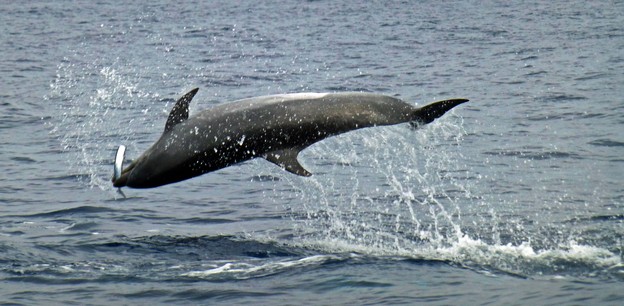
Here is one I call double catch: catching the mid-air dolphin with a catch in its mouth while I was out shooting whales off the Big Island, Hawaii.


09/04/14 07:17 PM #921    


Nancy Messer

Jeff - and where have you been all this time while we've been marvelling at Dave's photos?  Yours are beautiful.  You just keep them coming and the rest of us will have more to enjoy.


09/04/14 07:25 PM #922    


Jeff Daum

Thanks Nancy.  Short answer is that I sold my company a couple of months ago and I have been swamped since then (who would have thought! After 44 years in business I expected this would free up time.  But life is great and no complaints).  Hope to free up time to add and interact here indeed smiley


09/04/14 08:33 PM #923    


Larry Klein

Dave, Stephen, Jeff, etal - Looks like we're going to need a special 'separate' forum just for posting all this wonderful photography.

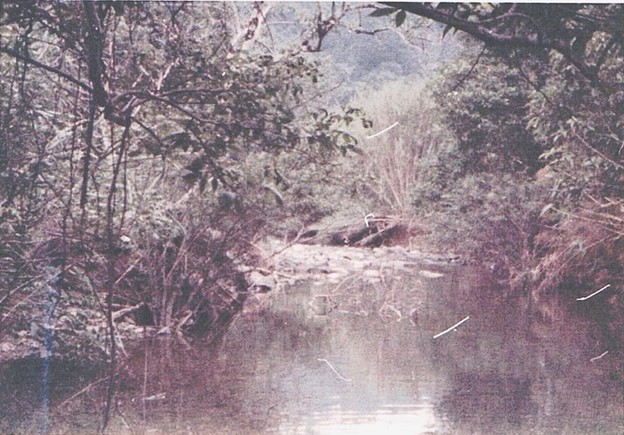
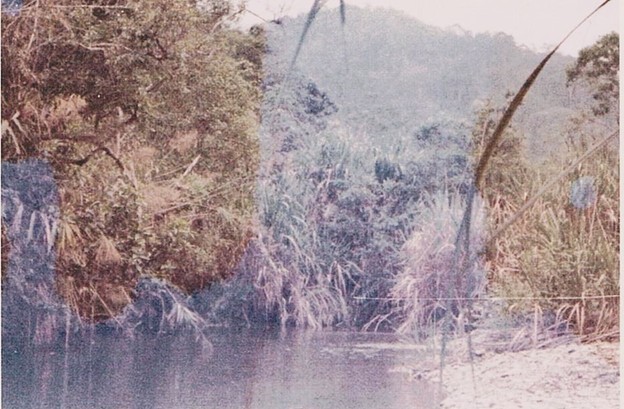
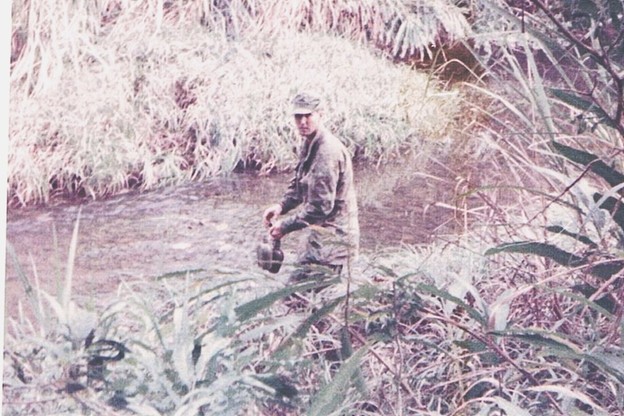
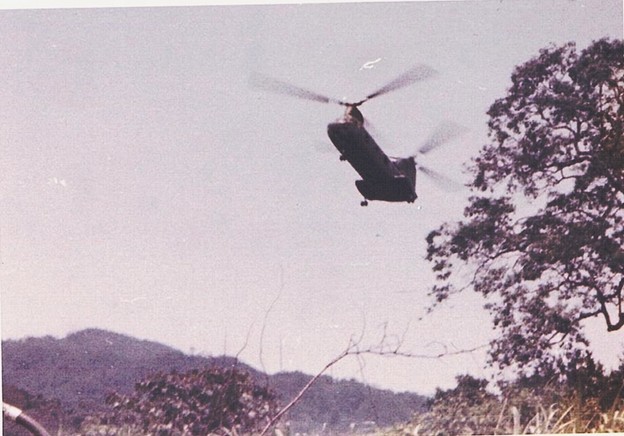
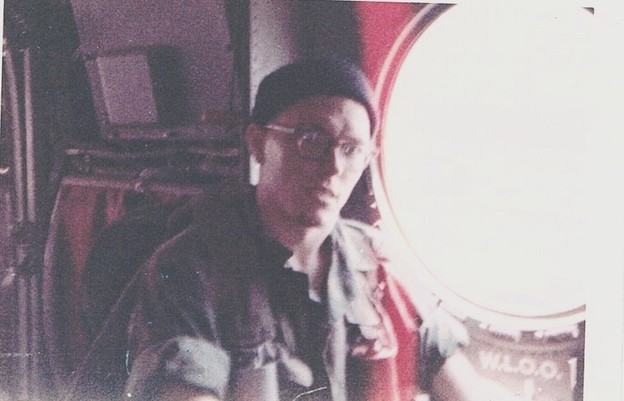
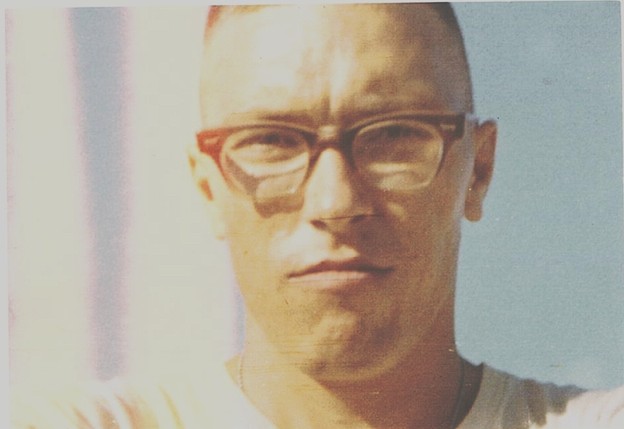
When I was in the Marines, I picked up a little hand-held 16mm camera in DC. I've scanned some of those pics for the forum here.  I carried that camera in my leg pocket when on patrols around DaNang and took some pretty interesting shots.  Unfortunately, one patrol near Elephant Valley to the north necessitated that we walk about 2 kms in the middle of a waist-high river.  Of course, I had forgotten about the camera in my leg pocket.  A couple of the shots you will see will reflect the result of a soaked camera. 

On the way home from Nam, I picked up a Yashica 35mm in Okinawa.  I still have that one, though haven't used it since I was the local bridge club photographer in the 90's.  Also still have a Polaroid B&W.

Above- The river 1.

The river 2. (note the water-logged effects)

On the river.

Our ride home.

On the ride home.

Ready for the next patrol.


09/04/14 10:47 PM #924    


David Buchholz

First of all, Larry, thanks for posting.  With Jeff's wonderful great timing photo of the dolphin dinner and your soggy Vietnam photos, we're finally getting a little action here. 

Jeff: I also love the idea of opening up the whole issue of how these questions you raise comprise photography.  And maybe others will chime in, too.  First, you said that you like the idea of using the camera in situ, meaning that by being able to control the four variables that Ansel Adams claimed were so important:  (1) what you see; (2) what you think you see; (3) what your camera sees; and (4) what you think your camera sees, you were able to make the most perfect exposure possible under the circumstances.  But if you examine the several stages of one of Adams' most famous (and valuable) photographs, "Moonlight: Hernandez, New Mexico," you'll see that what he saw wasn't the image itself, but what it was that it could become.  In other words, he saw a scene that many of us would have passed by without thinking, but he saw what, with the proper exposure, lens, film, and development time, it could become in his mind's eye—and therein lies what I believe is the beauty of the photographic process in the hands of an artist.  Whether it is in the darkroom or the computer, the perfect image can be enhanced by the chemistry and/or the computer.  Once we push the shutter button we are taking a moving, three dimensional scene and arresting its movement and cutting out a dimension.  In other words, we are already involved in a translation.  And whether it's film dyes or computer colors, all these aspects in a photograph are translated, some more accurately than others.  And whether you simply take the image that you're shooting on film, you are already translating, recording it to a specific film, (each of which has its own characteristics), then printing it though an optical enlarger to a paper, (each of which also has its own charactreristics), and by burning or dodging, or using a number of other techniques, altering the image.  You are translating.   By using Photoshop or Lightroom or Aperture or any of a number of other processes, I believe that—in the hands of an artist—we are simply trying to come closer to seeing what the photographer imagined in the first place.  And the appreciation of the quality of that image rests, as you suggest, in the eyes of the beholder.


09/05/14 08:13 AM #925    


Ira Goldberg

Thanks to the 'Chatterbox Five' for taking us back in time through a watershed year!


go to top 
  Post Message
  
    Prior Page
 Page  
Next Page