|
Philip Spiess
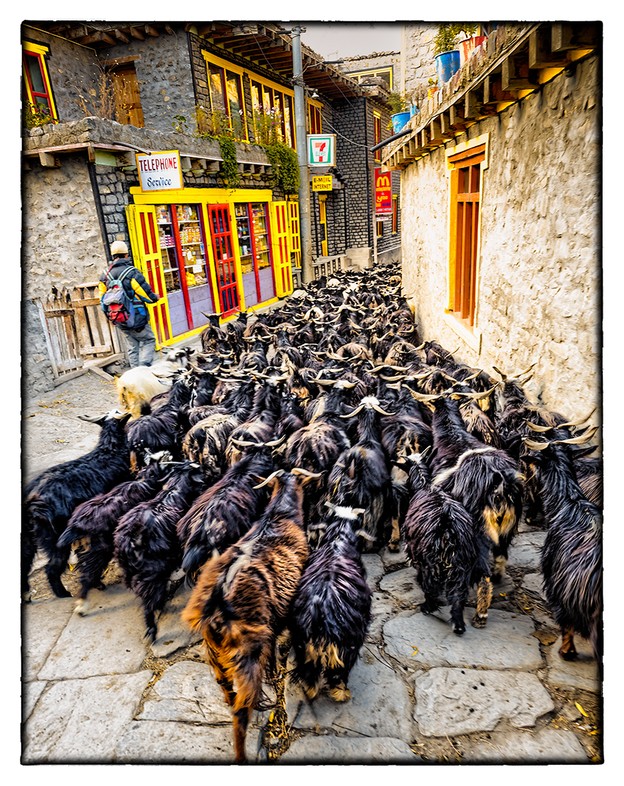
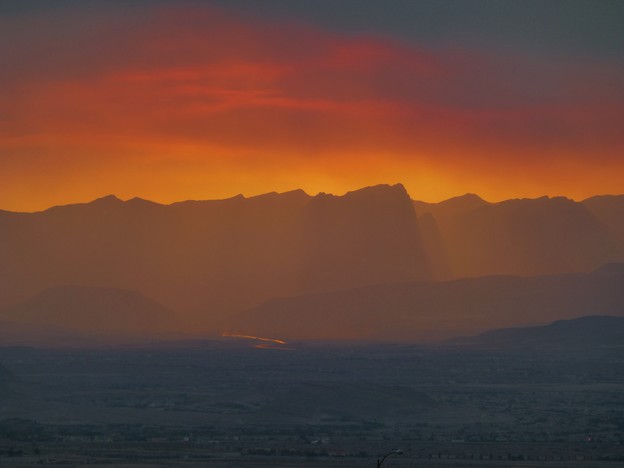
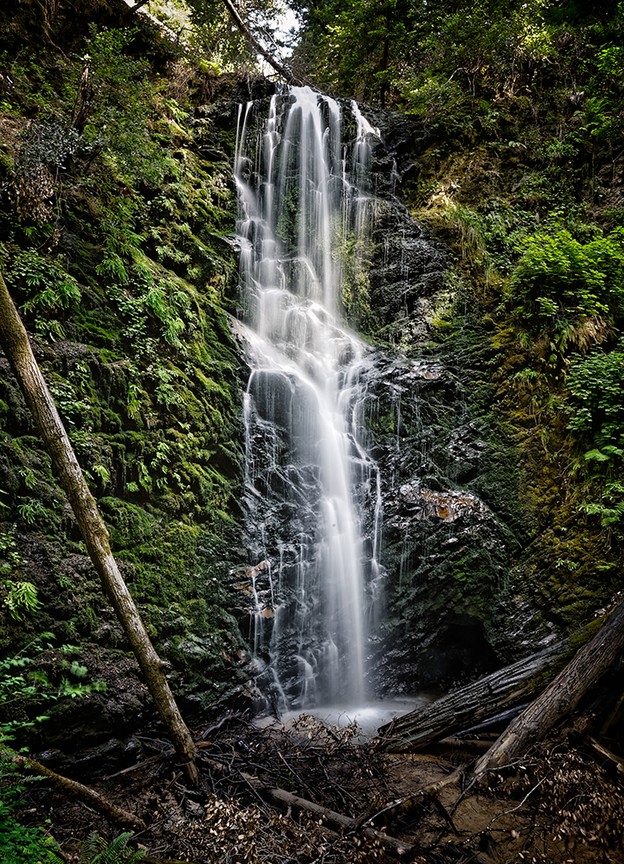
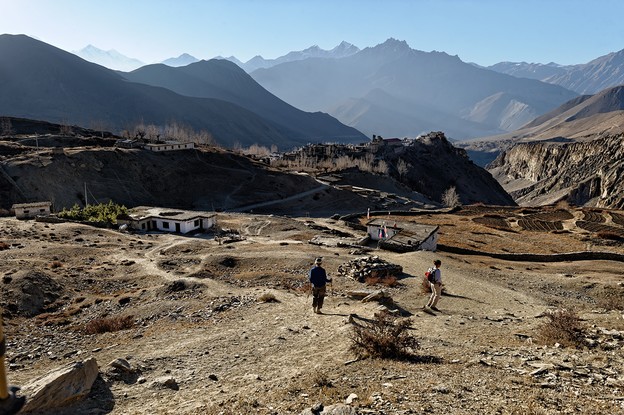
Dave Buchholz: Re photo of goats -- how Nepalling! Hope you didn't step in any Katmandu! The Berry Creek Falls photo is berry, berry nice! And the photo of Death Valley is so surreal that it looks like a landscape by de Chirico or one of the Art Deco posters produced for the National Park Service in the 1930s and '40s.
Nelson: Missed Macbeth; I've been traveling in New England for the past month and climbing mountains. Got to the top of Mount Major in New Hampshire, overlooking Lake Winnipesaukee, and had raised my hiking stick and announced loudly, "I claim this land in the name of King Ferdinand and Queen Isabella!" when my phone went off -- its ring tone is Wagner's "Ride of the Valkyries." A couple below me said, "Well, that was dramatic!"
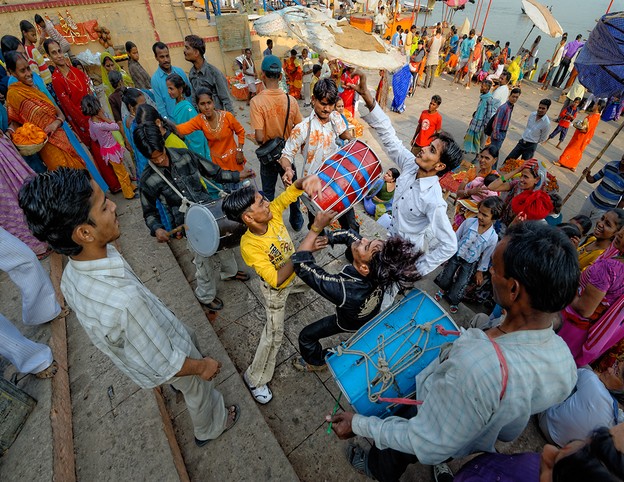
Ann Rueve: Your fourth ("fun house mirror") photograph on Entry #1097 looks like an original work of art somewhere between the styles (Danny Brown, take note!) of Marcel Duchamp, Joseph Stella, and Constantin Brancusi.
Jerry: Yes, "The Admiral on the Wheel" -- I used to like to sit in front of our Christmas tree when I was at WHHS and look at the lights with my glasses off, because they blurred so nicely. It was like something seen through a winter fog.
Chuck: Thanks for the Easter/Passover information; it was all new to me. Of course, what Christians celebrate as the Last Supper was, indeed, a Passover meal: Jesus was Jewish, a fact apt to be forgotten by most Christians. I have come to believe that Christianity as it formed over the ages into what we know it as today was really established by St. Paul, himself a good Jewish lawyer. By the way, The Oxford Companion to English Literature (at least the 4th ed. [1967], which I won as the 1968 recipient of the Hanover College English Department's John Livingston Lowes Award for Excellence in Research) has, as Appendix III, a description of the "Christian Calendar," i.e., the Western Christian religious calendar, denoting the holy days by Dominical Letter, Easter Day, the Regnal Years of the English monarchs, the dates of Movable Feasts, and Saints' Days -- from 1066 through 2000! (And, yes, I have recently heard of plans to rebuild the Temple -- there was to have been a copy of it at the 1926 Philadelphia Sesquicentennial Exposition, for which I have seen the plans, though it never materialized -- but, as you say, the rebuilding will be, if not during a red sun, at least during a blue moon.)
Jonathan Marks: I think with your theatrical sense you knew at the time that it was the best Peanuts ever, but, as you were heavily involved in it, modesty forbore you to say aught of it. Likewise our class: I'm not given to mathematical mysticism, but I always thought that '46 (the year most of us were born) and '64 (the year we graduated) seemed somehow interchangeable -- for undoubtedly cosmic reasons!
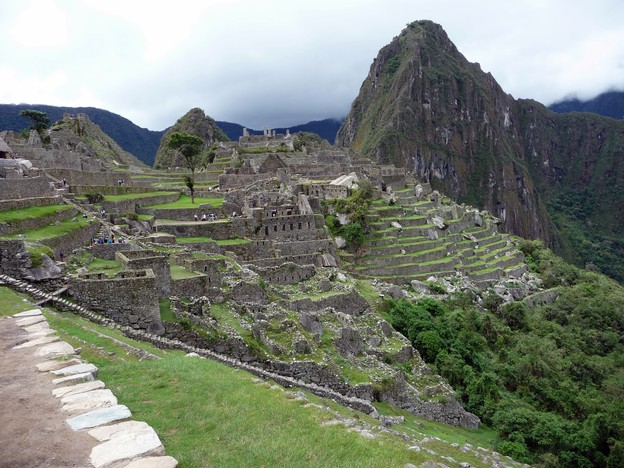
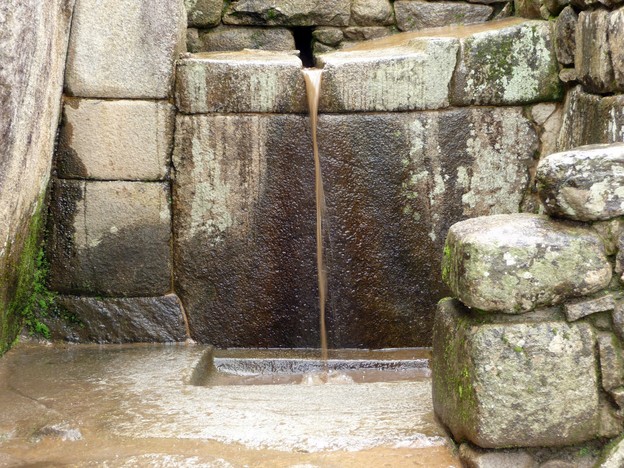
Jeff Daum: Your photograph reminds me of Tennyson's (my favorite poet, along with Byron) "Flower in the Crannied Wall." I have always been intrigued by the legend that Machu Picchu's massive stones were moved (flown?) into place by music (possibly flute) -- much more interesting than Merlin's moving into place the monoliths of Stonehenge!
And Larry: Speaking of ruins, that supposed Caribbean Mayan temple mound? You can't fool me -- that's the Miamisburg Mound State Memorial in Miamisburg, Ohio, north of Cincinnati, before they let the trees grow up!
Sorry, folks, that this entry was so long, but I was catching up on the comments and pictures posted during the month that I was gone on my trip. NOW -- for catching up with The Chatterbox!
|










 button like Facebook. I love all the pictures and Larry's sports updates v