|
Philip Spiess
Okay, going back a bit: Margery: Why were girls trying to climb out of the powder room window during Madame Federova's dance classes?
Jonathan Marks: You mention Summer Opera rehearsals at the Hotel Alms. Much earlier in these pages (nine months ago?) I was reminiscing about you wonderfully playing a waiter in Act II of Puccini's La Boheme. Am I correct in this?
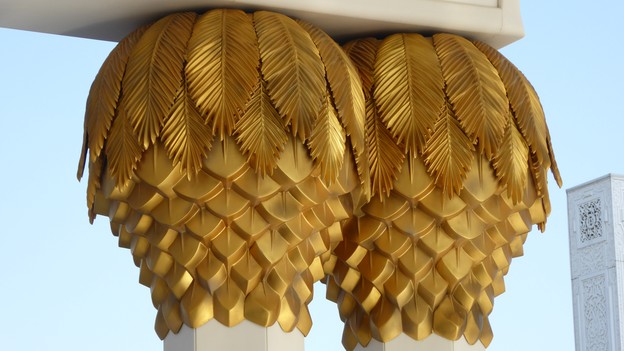
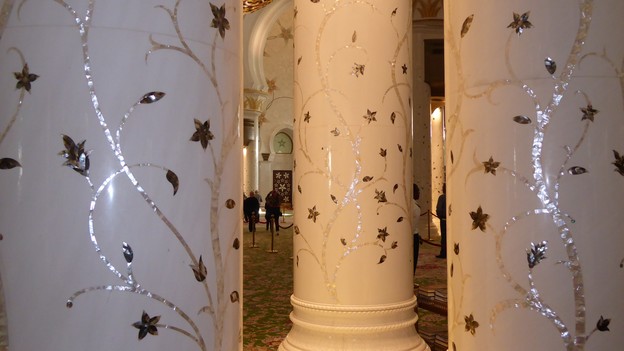
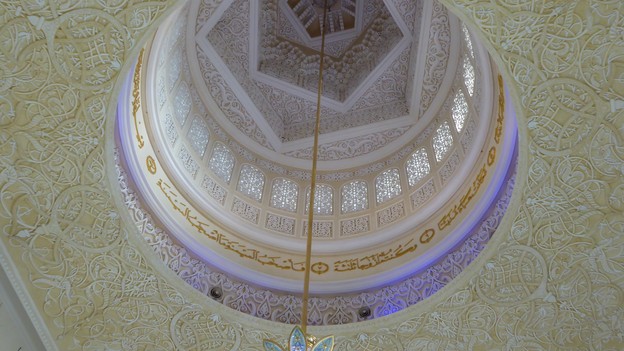
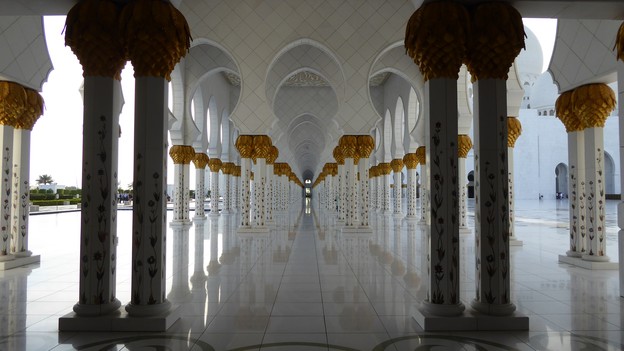
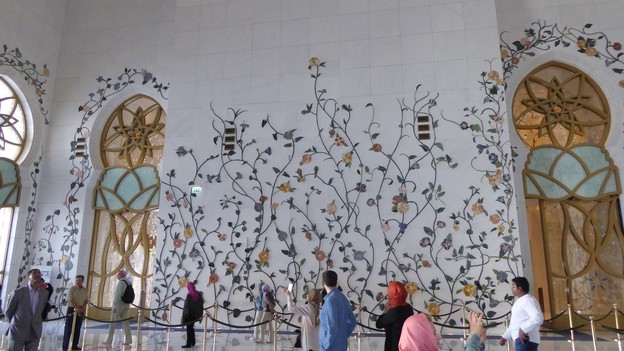
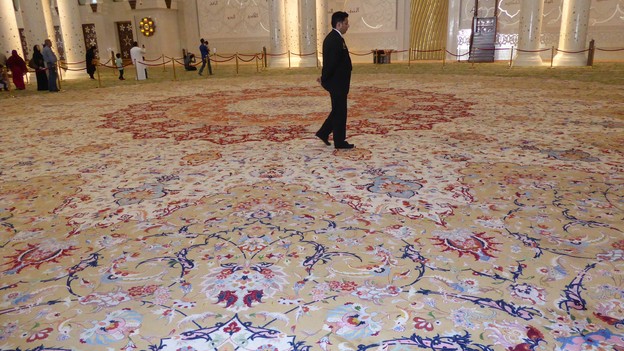
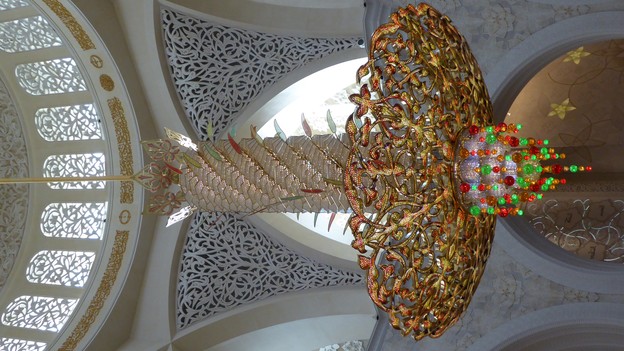
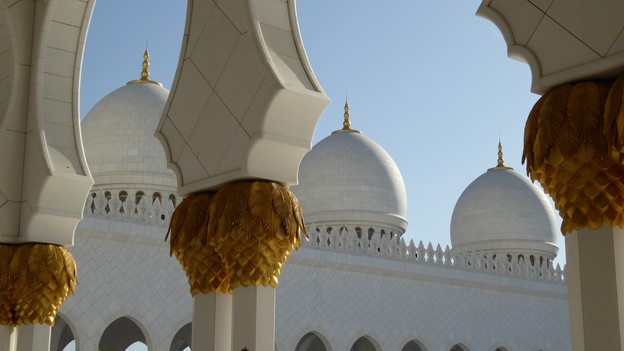
Jeff Daum: Thanks so much for the many pictures of the mosque -- it truly is a remarkable architectural marvel!
Mary: I always felt that the balcony of the Schubert Theater was way too close to the proscenium arch -- but this may have been the result of its redesign from a YMCA building. (As I noted much earlier in these pages, just west of the Schubert Theater was the George B. Cox Theater -- the two theaters were torn down at the same time, as the Cox actually backed up to the back stage of the Schubert. The Cox was named after Cincinnati's pre-eminent Republican political boss [more of him anon, if anybody's interested], whose home in Clifton is now the Pi Kappa Alpha Fraternity house ["Pike" house], just opposite the Jefferson Avenue entrance to Burnett Woods Park.) I saw Blackstone the Magician (not his son, equally famous, who I saw at the Warner Theater here in Washington, but the father, even more famous) at the old George B. Cox Theater, where he performed his most famous act, sawing a lady in half! And to the west of the Cox Theater, on the corner of the next street over (Vine? Walnut? I'm sorry: my Cincinnati maps are buried in my library annex), was the RKO Capitol Theater, which was converted in the late 1950s to showing Cinerama movies. But to return to the Schubert: the two most memorable performances I remember seeing there were the absolutely hilarious French variety farce, La Plume du ma Tante, and the original production of A Man for All Seasons, about Sir Thomas More; the stage show, I felt, was dramatically superior to the later movie, great as it was.
Laura: So the long-standing story (which I always suspected) that the architect of the Taft home was James Hoban, the architect of the White House, is untrue? (I always wondered how he got so far west!) And I remember seeing the Duncanson murals shortly after they were restored (first? second restoration?). I hope I'm remembering correctly (contrary to numerous comments in these pages, I don't always remember everything exactly!) when I say that I think the Cincinnati Historical Society has some framed Duncanson paintings. And then there's the story (possibly apochryphal) that Abraham Lincoln, as a secondary lawyer in the prominent McCormick Reaper Patent case being held in Cincinnati (the chief lawyer was Edwin M. Stanton, later Lincoln's Secretary of War), visited the Longworth Catawba wine vineyards on what is now Eden Park and paid a dollar [?] to a worker to show him around. The worker was actually Nicholas Longworth himself, one of the wealthiest men in America. Charles P. Taft (Anna Sinton Taft's husband and the step-brother to Willlam Howard Taft) was publisher of the Cincinnati Times-Star, later edited by descendent Hulbert Taft. And another Nicholas Longworth, grandson (I believe) to the first Nicholas Longworth (and whose sister was, I think, involved in the Rookwood Pottery), was Speaker of the House of Representatives and marrried Teddy Roosevelt's daughter Alice. A story there: Nick Longworth was not known for being terribly loquacious or humorous; he was also quite bald. One day a member of Congress came up to him and, stroking Longworth's bald head, said, "You know, Nick, your head's as smooth as my wife's bare ass." Longworth thereupon stroked his own bald head and said, " You know, you're right!" Katherine Hanna, long-time director of the Taft Museum (late 1950s to early 1970s?) lived in what is the most spectacular of the three or four Swiss Chalet houses in Cincinnati; it is on Upland Place, just east of Victory Parkway as it comes out of Eden Park. Another is one or two streets east (downhill) from Auburn Avenue in Mount Auburn (again, I'm missing my Cincinnati maps here). Anyway, thank you so much, Laura, for your knowledgeabe history of the Taft Museum!
Dougie Dupee (Trumble): Thanks for commenting on Payne piano lessons (I, too, took from Karl Payne -- the father -- my last year of lessons, which was in 7th Grade; he was also a violinist with the Cincinnati Symphony Orchestra).
Dave: Apropos Bastllle Day, in 1979, when one-third of the staff of the National Trust for Historic Preservation in Washington (myself included) was cut for budgetary reasons, I threw a backyard party entitled "Heads Will Roll!," to which only those staff members who had been released from their jobs were invited (our German friends from the staff of the Smithsonian Institution, also invited, were somewhat baffled by the whole thing: "Spiess? Not French, is it?"). Then in 1989, for the bicentennial of the French Revolution, on Bastille Day we held a second "Heads Will Roll" party, really doing it up right; the fireworks were extraordinary!
Bruce: Didn't see Camelot at Playhouse in the Park (though I saw a number of other productions there), but I did see the original traveling company do it during our WHHS senior year at the Taft Theater downtown (I remember I was on a double date).
Larry: My father taught me that one of the World War II Army marching cadences was "Left! Left! Left a wife and forty-eight children!" And also "Your pants are loose but your belt is tight! / Your balls are swinging from left to right! Sound off! One, two," etc. There were others, which I won't release here, as being inappropriate. And do I detect a touch of "diarrhea" in "diamentaries"?
|