Message Forum


go to bottom 
  Post Message
  
    Prior Page
 Page  
Next Page      

07/31/16 03:56 AM #2305    


Jerry Ochs

What happens in Michigan stays in Michigan?


08/04/16 12:28 AM #2306    


Philip Spiess

Mary:  I climbed Mount Rainier in 1962 and went in the ice caves, as well as did "tin-pants" sliding down the ice on the mountain.  Rumours tell me that both of these activities no longer exist, due to global warming.

Jerry:  I don't understand the phrase "not allowed to secede."  Isn't that exactly what the southern states did in 1861?  And, with all due respect to Jon Marks, who was one of my cultural colleagues and mentors in our high school years, perhaps we should have let those states go, given their current shenanigans (whoops, Gene, there I go discussing politics again!).  I well remember a cartoon, circa 1959, wherein a Texan is saying to an Alaskan, "Ah'm from the second largest state!"

Sally:  Where in the upper Hudson Valley are you?  (I love that area!)

Steve:  There is something in the water in Salzburg (salt?).  Aside from Mozart's giddy operas and ribald songs (cf. "Oh, You Earnest-Headed Donkey," "Off to the Prater," and, of course, "Leck mir in dem Arsch," etc.), there is the remarkable bishopric (no pun intended) Schloss of Hellbrunn, just outside of Salzburg, which has the most incredible set of practical-joke water fountains, guaranteed to drench all visitors to the castle and grounds, as well as a remarkable 18th-Century water organ (and much more).

I guess Johnny Osher, Laura Reid Pease, and Randy Greenwald are not religious clerics; they seem to be "lay" persons.


08/04/16 01:36 PM #2307    


David Buchholz

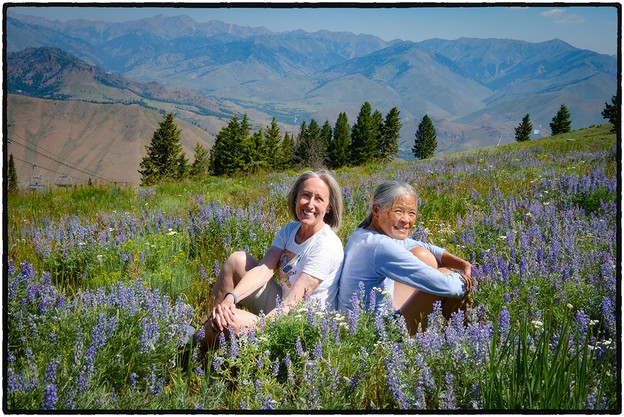
I just returned from a wonderful visit in Sun Valley with two wonderful women. For those who don't know her, the wonderful woman on the right is my wife Jadyne; the other wonderful woman, of course, is our own Gail Weintraub Stern.  (We're on top of Bald Mountain, 9600') on a beautiful July summer afternoon.


08/05/16 11:53 AM #2308    


Stephanie Riger

Great photo!  Great picture!  Great place!


08/05/16 11:54 AM #2309    


Stephanie Riger

OOPS - I meant Great PEOPLE!  Great photo! Great place!


08/05/16 03:24 PM #2310    


Steven Levinson

Sally:  I think that the "salz" in Salzburg is primarily the salt that has been extracted from the several mines surrounding Salzburg (desalinization is the method used, although the salt is in abundant crystaline form). Cathy took me on the Panorama Salt Mine Tour, on which you enter the mine by way of a miniature narrow gauge mining train.  It's in the Austrian Alps quite near Berchhtesgaden, which, believe me, while a gorgeous town with the some of the best apple strudel in the world, was a real head trip to visit.  The view of the Eagle's Nest generated some major cognitive dissonance!  The salt mine was spectacular.


08/05/16 11:52 PM #2311    


Philip Spiess

Steve:  Apparently we agree on the "Salz."  I missed the salt mines; have you seen the Hellbrun Castle?  And from the journalism pictures I've seen, the Eagle's Nest was destroyed by the Allied forces; anything still there? (I was stunned, in 1970, to drive through the outskirts of Munich, and suddenly realize I was driving through the Nazi stadium, now a race-car driver venue; even though the Swastika emblems had been removed, you could still see where they'd been.)  And then there was my time in East Berlin, the year before the Wall fell. . . . .


08/06/16 06:31 AM #2312    


Chuck Cole

I once attended a scientific meeting that was outside of Berlin.  The venue turned out to be a place where the HItler Youth trained, and the bar was located in what used to the hunting lodge for high-ranking Nazi officials.  It was disturbing to be in a place with such horrible history.  We took a day trip into Berlin and most buildings then had scars from where bullets had hit.  This was probably only 3 or 4 years after Germany was reunified.


08/06/16 02:09 PM #2313    


Jeff Daum

Chuck, I completely understand your feelings.  We literally just returned from an extensive trip that included Berlin.  I am still processing the visual and cognitive overload of architecture, people and cultures, and have yet to go through the preliminary culled collection of images (reduced to about 1000 at this time) I shot.  

Many extreme contrasts from the barren (treeless) stark beauty of Iceland to the astonishing buildings in Riga (where I have great grand parent's connections), to the wonder of St. Petersburg.  Also the most amazing (and visually overloading) museum of the Hermitage in Russia, where the physical beauty of the rooms compete with the art.

But with regard to Berlin, it left the mind reeling.  To be at the Brandenburg Gate, the Reischstag, to walk through the Holocaust Memorial, the New Jewish Museum, to learn of the current extensive reminders through eductaion, exhibits, etc. in an effort to ensure no one forgets was very emotional.  

At the New Jewish Museum, Daniel Libeskind, the architech created the "Garden of Exile", 49 columns standing vertically on a a slanting floor.  There are olive willows growing out of the top of the columns.  He stated: "One feels a little bit sick walking thorough it.  But it is accurate, because that is what perfect order feels like when you leave the history of Berlin."

Here is a shot that I think sums up the feeling:

Once I get a chance to catch up a bit, I will post some additional images...


08/06/16 05:06 PM #2314    


Steven Levinson

Phil:  We saw the Hellbrun Castle from the outside, but there was only so much that we could pack into the one full day (two nights) we had in Salzburg.  The Eagle's Nest was by no means destroyed.  Cathy's parents (her father was an Army quartermaster officer in Salzburg) were physically present in it more than once; apparently, it was a sort of military tourist attraction back in the early 1950s.  We spent the entire afternoon on the Sound of Music bus tour, visiting every location in and around Salzburg where there was filming.  Pretty neat!  Regarding Bavaria, including Munich and Augsburg, I've got to say that some of the most cultured, nice people I've ever met are there.  History is situational; Americans think that they live outside history, but they don't any more than other nations do.  Had the Treaty of Versailles been less gratuitously punitive and the Great Depression not dessimated Germany . . . , who knows?  Milgram proved beyond doubt that under the right conditions, literally everybody can be induced to be homicidal.  And not to get political or anything, America is increasingly resembling, from a sociopolitical and economic standpoint, Germany in the 1930s.  We could go totalitarian too, under the right circumstances.


08/06/16 10:59 PM #2315    


Philip Spiess

Steve:  I've spent just a brief time in Munich (1970), but Spiess is apparently a Munich name; Adolf Spiess was the artist who decorated "Mad" King Ludwig II of Bavaria's castles, notably Neuschwannstein, with a series of paintings based on the Wagnerian operas Ludwig so loved and financially supported.  And to address your assessment of World Wars I and II:  even when I was taking Joseph Knab's APP course on "Modern European History," I fully believed that the Versailles Treaty was the sole cause of the Second World War.  Indeed, on the final APP exam we had to take, I stated that "Clemenceau thought that the basic problem was Germany.  Orlando thought that the problem was getting Italy part of the spoils of war.  Lloyd George thought that the problem was Woodrow Wilson.  And Wilson thought that the problem was Clemenceau."  (I don't think I got any extra points for this answer.)  On your last point, if you haven't read Sinclair Lewis's novel It Can't Happen Here (1935), read it!

Jeff:  Opera composer Richard Wagner, fleeing from his many debts in Germany, spent two years in Riga conducting operas to make money.  It was here he began his first well-known opera, Rienzi (1842) (well, the overture is still famous and performed), based on Edward Bulwer-Lytton's novel, Rienzi:  Last of the Roman Tribunes (1835).  You may recall that Bulwer-Lytton was the British author who began one of his pot-boiler novels, Paul Clifford (1830), with the now-famous lines -- famous courtesy of Snoopy -- "It was a dark and stormy night. . ." (interestingly, Edgar Allan Poe, the following year, included the line in his short story "The Bargain Lost").  Also, Bulwer-Lytton's incredible pile of a Victorian house in England, Knebworth House, is well worth visiting.  But I digress:  after two years in Riga, Wagner and his first wife, Minna, had to flee again, due to mounting debts.  (Wagner, throughout his life, lived luxuriously, even when he couldn't pay for it.  Luckily for him -- though not for the state of Bavaria -- "Mad" King Ludwig supported him financially in the latter half of his career -- cf. his "Festspielhaus," designed for the production of his own operas, and his final home, "Wahnfried," in Bayreuth.)  It was when Wagner was leaving Riga and embarked on a ship from Konigsberg (now Kaliningrad  -- and where I'm convinced the original Amber Room from Catherine the Great's palace of Tsarskoye Selo outside of St. Petersburg is buried under a street), to sail across the Baltic Sea to London, that the ship rounded a point in a storm and Wagner heard the legend of the "cursed captain" (he originally said he took it from a story by Heinrich Heine), which he turned into his next opera, Der Fliegende Hollander (The Flying Dutchman, 1843).

Oh, and Jeff:  When I was in East Berlin (as it then was) in 1988, as a guest of the East German government (it was an American-East German museum cultural exchange), I ran down "Unter den Linden" before my bus left for Dresden to photograph the Brandenburg Gate from the only side of the Wall on which you could see it (the Reichstag was still in ruins then), and barely made it back to my bus.


08/07/16 03:44 PM #2316    


Steven Levinson

Phil:  So last night, while Cathy was at the Convention Center listening to her calabash relative, the superb jazz musician Jeff Kashiwa, along with a number of her late husband Francis's family, I watched the recently delivered Bluray disk of Son of Saul, which won this year's Oscar for Best Foreign Language Film, along with the film festival interview of its writer/director, lead actor, and cinematographer.  If you haven't seen it, I urge you to.

Cathy and I have been in Munich/Augsburg together twice (both times as part of Honolulu-generated BMW factory delivery groups, the first in 2001, and the second in 2009).  In 2001, we visited Neuschwaanstein with out dear friends Anneta Geiger and Bernie Gebhart, including the grotto that Ludwig built for private Wagner performances, but used only once.  What a magnificent complex, but I certainly understand why the family probably murdered him over his squandering!  And although it may not be kosher, Munich has made me a confirmed schweinhochsen lover, notwithstanding that I don't know whether I'll ever be lucky enough to encounter it again.

Sole causes are rare, but if there are any, I agree with you that the Treaty of Versailles plus the Great Depression are sufficient, in and of themselves, to explain World War II in Europe.  Without them, . . . probably no Mein Kanpf, Final Solution, Anschluss, etc.  That's what vindictiveness produces, along with walls, xenophobia, barbarity, self-glorification, and all the rest.  Maybe we'll all join Ruth Ginsburg in New Zealand someday soon!  Not to get political or anything.


08/08/16 12:52 AM #2317    


Philip Spiess

Steve:  In 1970, when my parents and I traveled to Germany (it was my graduation present from my first graduate school), because it was the year of the Oberammergau Passionspiel (done every ten years nowadays), at my insistence, we hit all three of King Ludwig II's Bavarian castles -- Neuschwannstein, Linderhof, and Herrenchiemsee (the last almost a replica of Louis XIV's Palace at Versailles).  A memorable moment in the history of Neuschwannstein, apparently, was when King Ludwig invited Bismarck there (they were negotiating the consolidation of the Second Reich between Prussia and Bavaria) and, at midnight, took him out on the balcony of his bedroom to overlook the waterfall on the mountain across the way, which he illuminated with fireworks and some of the first electric lights in Germany (the earliest were his blue and pink lights illuminating the "Venusberg " Grotto -- a la Tannhauser -- at Linderhof, as well as the battery-operated lanterns on his wolf-drawn Baroque sleigh, which he drove through the night to meet at taverns with commoners!).

Now, I will admit, being a Wagnerite and a devotee of King Ludwig, I think he was sorely maligned by his ministers and history.  Although his castles cost the Bavarian budget, he himself opened the ones he was not at any moment staying in to tourists (at a fee), thus augmenting the coffers of the Bavarian state.  And his suicide in the lake (not family murder) is instructive:  his "psychologist" (what did that really mean in the 1880s?), from all I've read about him, sounds like a quack -- Ludwig was locked up by his family and ministers of state as being "mad" -- and Ludwig, as near as I can tell, being a sensitive aesthete (and a homosexual), in desperation strangled his "psychologist" (he was actually a very strong man) and then walked into Lake Starnberg and committed suicide (there is a memorial cross in the lake where his body was found). 


08/08/16 03:52 PM #2318    


Steven Levinson

Phil:  When Cathy and i spent really quality time with our friends Anneta and Bernie in 2001 (at the tail end of our honeymooon) in and around Augsburg (Anneta being a honcho in the Allgäu Tourist Bureau and Bernie a hotelier in Munich), we attended the operatic performance on the shore of Schwansee (I think) depicting Ludwig's life and death.  The entire stage of the theatre (which was dedicated exclusively to these performances) was flooded in the last act as part of the suicide scene.  Quite splendiferous. The opera subscribed to the suicide theory, although Anneta insisted that the circumstances of Ludwig's death are still controversial, familial responsibility not being completely ruled out. The whole thing was in German, of course, and A&B did their best to translate for us, sotto voce, during the performance.  Lugwig was clearly still much beloved in Bavaria; tickets were hard to come by and very expensive.  The operation was later closed down; too expensive to continue as originally contemplated, much like the castle itself, I guess.


08/12/16 02:52 PM #2319    


Dale Gieringer

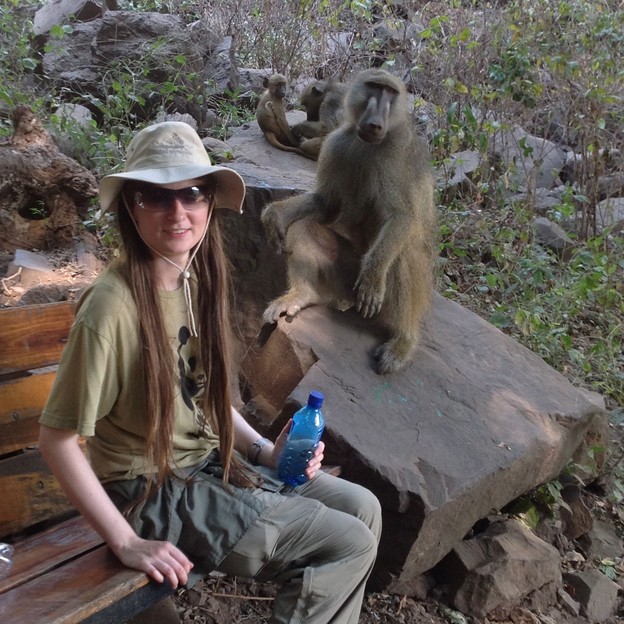
  On the subject of summer vacations, our family just returned from a safari excursion in Botswana and Victoria Falls, Zambia (where it was not really summer, but winter).   While  Africa was not at the top of my bucket list, as we half-expected to return with malaria and dysentery,  it turned out to be a fabulous experience.   Botswana is like the zoo turned inside-out - animals are everywhere outside, people carefully stay inside their tents and cars.  We rented a 4x4 Toyota Land Cruiser fully equipped for every emergency and drove  on unpaved sand tracks from Maun to Victoria Falls through the Okavongo Delta, Moremi Game Reserve and Chobe Park.   Driving was like an amusement park ride.  Fortunately, our car had a special super-low four-wheel gear to get out of the deepest sand traps.  For 400 kilometers, there were no gas, grocery stores or services and scarcely any pavement, road signs or litter. Fortunately, we were equipped with a well programmed safari GPS.  The countryside was uniformly flat, sandy and scrubby, but the wildlife incredibly abundant.  At any given moment,  giraffes, elephants, impalas, ostriches or baboons might be crossing the road.  Looking over the savannah, it was not uncommon to see elephants, hippos, zebras, warthogs, guinea fowl and antelope all grazing together like in a natural history museum diorama.   The predators were harder to spot, since they come out at night when wise travelers stay inside their lodges or camps.  At one lodge, we weren't allowed to walk alone 1000 feet to our tents after dark for fear of the animals.  We didn't see anything, but heard lions roar, hyenas howl, and hippos feed nearby.  In the morning, we found a signpost right outside our tent had been broken by a passing elephant.   On the last day of our drive we finally saw a lioness lying guard in the daytime right alongside the road.   I wish I had a telephoto to capture it, but we had to keep our distance and my good camera wasn't working so I used my IPad to take pictures.  Below is a picture of our daughter Arianne sitting with a native at Victoria Falls.   For more, see  https://www.flickr.com/gp/141541776@N03/k47H22.  


08/13/16 12:03 AM #2320    


Philip Spiess

Steve:  I'd never heard of the operatic performance of Ludwig's life and death; it sounds extraordinary.  It's a shame they've had to discontinue it.  And, yes, Ludwig's death remains controversial, because no one else was present at his death (so far as we know), except he himself and his so-called "psychiatrist."  Apparently he was beloved by his subjects, but much maligned by his ministers in Munich and contemporary commentators.  (Would we have had the "full" Wagnerian repertoire without him?)

Dale:  Your African sojourn reminds me of certain Hemingway short stories and some others by later authors that always have bad endings due to "wild animals in the night."  So many questions about your trip:  How did you get gasoline for your car?  No grocery stores?  How (what) did you eat?  Are you familiar with the film, The Gods Must Be Crazy?  Impalas crossing the road?  I didn't know they had that many obsolete automobiles in central Africa!  (Nor did I know that they had ostriches in Africa -- yes?)  Hippos feeding at night?  I thought they ate water plants?  Am I wrong (can you hear that at night)?  (Why are elephants not allowed in public swimming pools?  Because they wear their trunks on the wrong end!)  And, by the way, is that Donald Trump sitting next to your daughter?  


08/13/16 12:37 PM #2321    


Bruce Fette

Phil et al,

When I toured crazy Ludwig's castles, our tour guide told us his version was that the towns people killed Crazy Ludwig, but that no evidence was found to prove it. I thought the Opera Cave was particularly unique, having been a spelunker in Arizona.

Dale, and Phil, regarding the final comment: :))


08/13/16 02:43 PM #2322    


Dale Gieringer

A   Phil,   

      You aptly mentioned "The Gods Must Be Crazy," a charming if fanciful comedy about the San people, AKA bushmen, an indigenous people of the Kalahari desert, whom we had the opportunity to visit a couple of days before embarking on our safari drive.  My wife had a grad student working with them on an engineering development project sponsored by the International Development Design Summits, a kind of technological peace corps.  We were invited to camp out in their village of D'Kar, which happens to lie diametrically opposite the island of Oahu, Hawaii (the only U.S. state that is antipodal to land).  The San are one of the world's oldest living cultures, having inhabited southern Arica continually for the last 40,000 years, but they have been marginalized and displaced by newer invaders such as the Setswana, who now control the country and have put an end to the San's traditonal hunting and gathering lifestyle.   The D'Kar villagers speak a  language known as Naro, which like other related Khoi-San languages features unpronounceable "click" consonants that sound like a popping cork and come in 28 different flavors distinguishable only by natives. You can hear them in the "Gods Must Be Crazy,"  though I should caution that the movie romanticizes the simplicity of the San, who are by no means naive about the origin of technological miracles such as Coca-Cola bottles, as portrayed in the film (nor is it true, as the film portrays, that rhinos tramp out fires;  in fact, so few rhinos are left in Southern Africa that they can only be found in a couple of special preserves).   Like indigenous cultures throughout the world, the San have been hard-pressed to come to terms with modern civilization, but they were sweet and charming hosts.   We stayed for a night in a San-run game reserve named Dqae Qare (pronounced something like spluttering static), where we encountered our first flocks of ostriches, striding quickly and gracefully through the brush.  

Regarding hippos, you are correct that they dine in the water.  One of our camp tents was located near the river.  When I cautiously stepped outside at night to view the southern stars (the most brilliant heart of the Milky Way  being visible at the zenith there),  I heard an ominous "splish-splish-splash" sound, like a giant trodding through the waters, which went on insistently in the dark.   In the morning, I was informed it was the hippos feeding.

As for food and gas, we tanked up in Maun, the only town with fuel for 200+ miles around.  Fortunately we didn't do so on Sunday, when all the stations ran out of diesel fuel.  Our camper had a refrigerator to store food and drink, though we mostly ate our meals at lodges, which served hearty English breakfasts and set dinners featuring potatoes, sorghum meal, yams, local fish ("bream"),  tomatoes and salads which we didn't touch due to fear of food poisoning, and excellent beef.


08/13/16 07:14 PM #2323    


Philip Spiess

Bruce:  Ludwig was beloved by the Bavarian people, so I doubt the story that they killed him -- if anybody, it was more likely his ministers, whom he crossed constantly (particularly when he was politically advised by Wagner), if his death wasn't suicide.

Dale:  Thanks for responding so promptly; I'm really impressed by your detailed knowledge of the area (so many things I did not know).  A close examination of "The Gods Must Be Crazy," and its sequel, suggests that the San people are not as simple as an initial viewing of the movie might suggest (of course, it's really a satire on other aspects of modern life).  The "click" sounds are ones I've heard over the years from numerous companions who have become absolutely inarticulate due to excessive drink (this would account for the "cork-popping" tone).  As to the tomatoes and salads, in 1964 (following graduation from WHHS), my family took its first trip to Europe.   My mother had been advised by the family physician not to eat any fresh produce on the trip, as it was grown with manure (animal and human), and might not be sufficiently washed.  Indeed, in the Dutch- and German-speaking countries we saw many "honey-dipping" carts spraying liquid manure (i.e., Mist-haufen) over the fields of crops, but my sister, father, and I happily ate the lovely salads we were presented with at meals, and suffered naught thereby.  Then there were the just-killed deer hanging up in the hotel courtyards to be thoroughly bled before being cooked as venison steaks. . . .


08/16/16 02:00 PM #2324    


David Buchholz


Vacations and Turning 70.  My wife Jadyne pulled a 70th birthday surprise on me by simply telling me that she was packing my suitcase and that I needed to be standing in the living room at 6 am a couple of Sundays ago.  Uber came.  We went.  When we arrived at SFO's International Terminal I saw the boarding passes—two round trip tickets to Molokai where we had met at a Peace Corps training camp forty-seven years ago.  No one goes to Molokai on purpose.  Its seven thousand residents (three thousand natives) don't really welcome tourists; there are no real restaurants, just one hotel; there's not a lot to do, but we made the most of four days on the island.  I've included twenty photographs on my web site.  

http://www.davidkbuchholz.com/molokai/


08/16/16 07:57 PM #2325    


Jeff Daum

What a neat and thoughtful surprise David.  The photographs are beautiful.  Thanks for sharing.


08/16/16 11:19 PM #2326    


Philip Spiess

And congratulations to your wife for making a memorable reminiscence trip a total surprise!


08/17/16 04:25 AM #2327    


Jerry Ochs

"Who wants to learn about Roman numerals?"

"I, for one."


A Roman soldier walks into a bar, holds up two fingers, and says, "Five beers, please."


08/19/16 11:27 PM #2328    


Philip Spiess

Okay!  So, a Latin professor walks into a bar and orders a "Martinus."  The bartender says, "Do you mean a Martini?"  And the professor says, "If I'd wanted two, I'd have asked for them!"

And then -- A German professor walks into a bar and says, "Zwei martini, bitte!"  And the bartender says, "Dry?"  And the professor says, "If I'd wanted three, I'd have asked for them!"

Jerry:  You never told me, in our many discussions of Lafcadio Hearn, former Cincinnati yellow journalist and later leading Japanese literary light, that he'd written a cookbook!  That would be La Cuisine Creole:  A Collection of Culinary Recipes (1885).


08/21/16 12:34 PM #2329    


Richard Winter (Winter)

On the theme of walking into a bar:

A gorilla walks into a bar and says, "A scotch on the rocks, please." The gorilla hands the bartender a $10 bill.

The bartender thinks to himself, "This gorilla doesn't know the prices of drinks," and gives him 15 cents change.

The bartender says, "You know, we don't get too many gorillas in here."

The gorilla replies, "Well, at $9.85 a drink, I ain't coming back, either."


go to top 
  Post Message
  
    Prior Page
 Page  
Next Page