Message Forum


go to bottom 
  Post Message
  
    Prior Page
 Page  
Next Page      

07/27/19 07:30 AM #4193    


Paul Simons

Time out - no matter which side you're on this is hilarious. 

https://www.newyorker.com/humor/daily-shouts/my-name-is-robert-and-i-will-be-your-waiter-this-evening/amp


07/27/19 09:52 AM #4194    


Bruce Fette

Paul and Lee,

One of my Caving buddies in Arizona was Don Lancaster. One of his favorite things to do was to search the desert for these secret watering holes. He called them Tinajas. And of course when you find one, you must try it out. This results in skinny dipping, preferably with your most favorite companion.  You will note that his website is tinaja.com. I suspect that Reddington Pass has a number of perfect tinajas.

And happy to hear that Mt Lemmon is green and ski-able again. Did they get snow this year?

David, I went through Kanab on my way to ski BrianHead, Park City, and Alta.

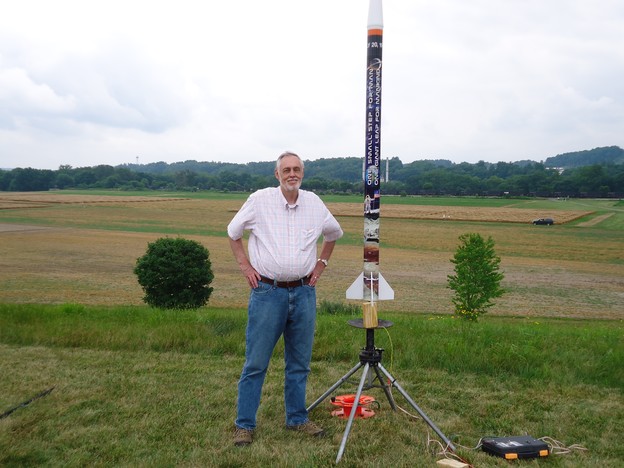
Last weekend I just didnt get around to posting this picture. But here is my Moon Lander rocket, launched from Blacksburg Virgina in 2014. At the time, I was celebrating the 45 year anniversary of the landing.  My Dad worked on the moon buggy. But since over 400,000 people were involved, I suspect that other WHHS folks also have one or more connections to the Apollo program.


07/27/19 04:33 PM #4195    


Lee Max

Paul and Bruce,

I am familiar with Redington Road from mountain biking and motorcycling. Unfortunately, the first 3 miles have been paved and are no longer dirt. At about the 10 mile point is the trailhead for Chiva Falls. That may be where the pools are located that left you with such fond memories. 

This past winter was a very good year for snow on Mt. Lemmon. The road up the mountain was closed at the base (approximately 2800 ft.) several times.

Lee


07/27/19 07:13 PM #4196    


Paul Simons

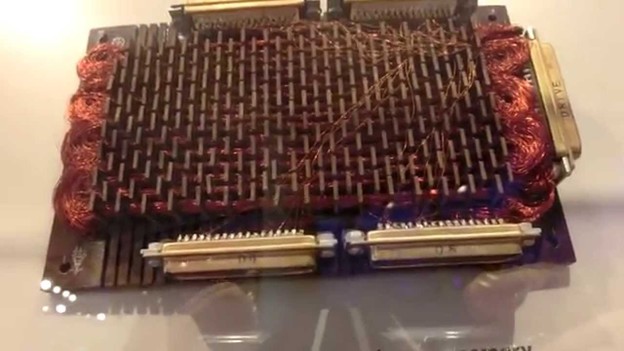
Bruce - congratulations on the moon rocket! Elon Musk - Richard Branson - who dey? You have a far more sleek, economical design there, and it's wonderful you were able to use the original wire "rope" memory registers.

Lee thanks for the info on Redington and Mt Lemmon. Very glad things are back to normal. I will never forget, when I lived there, riding my bicycle out to Sabino Canyon, expecting to find some kind of water, and finding none. I had some packaged fruit bars and got what water they held and obviously I didn't die but it's amazing how fast the need for water above all else becomes clear when you don't have it, in the Arizona desert. I heard on the news that someone was being prosecuted for leaving water in the desert for migrants. He is facing jail time. I am asking myself what the hell has happened to my country. Jail. For leaving water. In the desert.


07/28/19 08:52 AM #4197    


Chuck Cole

Bruce--I'm pretty sure I've seen a picture in the past of you next to a rocket ready for launch.  I think it was from the rocket club in 7th or 8th grade.  It's great that you are still building and launching rockets.  I'd love to attend one of your launchings--maybe it could happen at our next reunion.  We were so shaped by space, well before getting to the moon by the end of 1969 was put forward by JFK as a national goal.  


07/29/19 06:38 PM #4198    


Bruce Fette

Chuck,

Yes, I am sure we all remember the Geophysical year of 1957-58, when Sputnik also went up. However, even as that went up I had already been experimenting with making black powder rocket fuel by mixing well known chemicals, and testing them. Nearly every boy on my street was doing the same, and comparing ideas. I was less in the know about nozzels at that time. I could share many more amusing stories.

As for Sputnik, I also remember tuning my short wave radio to listen for Sputnik (although I had no idea what frequency nor what it might sound like, nor when it might be within range). Naturally imagination ran wild on that idea. I think I had at least 2 short wave radios for that purpose. 

Going to a rocket launch? Phil went with me to one winter launch in Culpeper Va. It took about 5 igniters to get enough heat to start the motor.  :)  Well for now you can catch this launch, probably 2013 or there abouts.  

https://www.youtube.com/watch?v=riHVeTE7fGQ


07/30/19 09:06 AM #4199    


Judy Holtzer (Knopf)

Anyone else remember Mrs. Mount's fury when the Russians sent up Sputnick?


07/30/19 07:23 PM #4200    


Jerry Ochs

Who was Mrs. Mount and why was she furious?  Weren't we all in grade 6 in October of 1957?  I, for one, was thrilled.


07/30/19 07:56 PM #4201    


Paul Simons

I seem to remember a Miss Mount at Bond Hill school. Also a Miss Karches who insisted that there were no "amphibians" but there most certainly were "amphibibians". So began my suspicions of the educational establishment. But on reflection of course it does more good than harm.

07/31/19 01:34 PM #4202    


Barbara Kahn (Tepper)

Paul, You're making me laugh again.  I was at Bond Hill until the Christmas break of 4th grade. The name Mrs. Karches sounds familiar but not Miss Mount.  


07/31/19 03:36 PM #4203    


Ira Goldberg

Gwynne and I were in New Smyrna Beach to watch the final night launch of the space shuttle. It was exactly like your rocket, Bruce. Just bigger and noisier. And, the difference between the time we saw and heard the rocket was lengthy. Exciting time 


08/01/19 08:24 AM #4204    


Chuck Cole

Ira--I wish I could have joined you for that final night launch.  My cousin lives in New Smyrna Beach and was always hyper excited as a nighttime launch drew near. I did get to attend the final (daytime) launch of the Shuttle, with my brother.  It was thrilling and yes, the delay between sight and sound was striking.  Each of us bought as a memento a T-shirt of the Atlantis, listing the dates of all of its launchings, just like a rock and roll band tour T-shirt. Why did I wait so long to get to see a manned spacecraft launch in person?  At least before long we'll have the chance to watch again.


08/01/19 02:38 PM #4205    


Paul Simons

This is to address the general topic of scientific progress despite unqualified science teachers as Barbara got a grin from. TV lately has been a lot about the Apollo program and the computer systems of the era. In reading up on Margaret Hamilton the main Apollo programmer I realized that Bruce Fette might have had a hand in this type of work not long afterwards. Is that true Bruce?


08/01/19 10:52 PM #4206    


Bruce Fette

Paul,

I cant specifically point to a personal product delivered to the space program. I know my Dad worked on the moon buggy and he has a home movie of an astronaut.

During the 1965-1968 time frame I wsa a coop student at Texas Instruments in Dallas.  TI built a lot of elecronics for the space program with their very tiny innovative chips, and amazingly innovative circuits. While I had many very interesting jobs there, they never said anything to me about where products I worked on were delivered. I did do some pretty interesting computer programs.

However, my job at Motorola beginning in 1969, involved design of the first Motorola microprocessor (kind a practice run for the 2nd one they did) and the second one went to production, lots of calculator chips, speech recognition by computer, and radios made with computer chips (which we now call smart phones). So some of you may have had some stuff I was involved with at Motorola.

I bet that many of us were involved in exciting and valuale new things throughout our lives, some technology, some ideas, some plays, some books, some art, some photos, some music, some teaching, some medical advances, some products, some support to various communities of people, all important to what we do here in America. (What should I have also mentioned?). I think learning how each of us did interesting things is currently, and will continue to be fascinating.  This forum is a great way to learn what interesting things each of us have done. I hope to hear a long list of fascinating activities from the entire class.(I already know about some of you very interesting people.:)

I will mention however, that the organization where I work now, has a once a year Science and Technology event for the schools in Alexandria Virginia. At this event, I do a big thing about Rocket Science. The kids really love learning about rocket design and hands on rocket fight. Its really geat to see their excitement.


08/02/19 12:51 AM #4207    


Philip Spiess

Judy:  I am coming in late on your 7-20 post about cemetery vandalism, because I was on vacation.

My paternal grandmother's grave and monument is (was?) in Vine Street Hill Cemetery in Clifton (the home of our classmate Donald Dahmann, whose father and grandfather were Superintendents of the cemetery; thus he lived there, and thus he and I played in the cemetery many times).  When I was last in Cincinnati (some years ago), I looked up my grandmother (Eva Zimmerman Spiess)'s gravesite, and discovered, to my horror, that her modest monument had been attacked by vandals, and had been broken into pieces (which were still there on the ground; it looked like it had been attacked with a baseball bat).  What was the purpose of this vandalism?  Was it "anti-Semitism"?  (Our family is not known to be Jewish -- though there is some thought that, way back when in our German heritage, there may have been some Jewish connection.)  I think probably not (about the anti-Semitism):  for years Donald Dahmann's father told us about vagrants cutting through the cemetery at night from Vine Street to Mitchell Avenue, even though the gates were closed and locked.

But there was a second problem with Vine Street Hill Cemetery:  it had run out of space in which to bury bodies (Spring Grove Cemetery, in Winton Place, on the other hand, had long since bought much land up Grey Road, almost to College Hill, in which to expand, and had built a Columbarium as well, in which to store bodies).  As I saw it on my last visit, Vine Street Hill Cemetery had removed former roads in the cemetery in order to utilize this available ground in which to bury bodies.  As I knew the cemetery through my visits with Donald's family in the cemetery, I was very upset that the cemetery which I'd known so intimately through my youth, and where my grandparents on both sides of my family were interred, was being desecrated through its inability to survive financially and locally.  


08/02/19 07:09 AM #4208    


Paul Simons

 First I have to marvel at the underlying reality in these posts that overall, something about WHHS allowed us to live in a country, in fact in a world in which bigotry and dehumanization of "the other" - ANY other depending on locale - was and is rampant, without becoming that way ourselves. That's here throughout these posts, from years back and immediately preceding this one. Then to echo Bruce - it does appear we're continuing along learning new stuff, doing new things. For me it's trying to keep up with a certain type of electric guitar sound, tone, melodic content, and often that means something Charlie Christian played in Benny Goodman's band about 80 years ago but is new to me. Also I did take a few IT courses and once asked the instructor what the first lines of code in Windows 95 were and she said "# include". That's what all the C++ code I ever saw or tried to write started with. So Bruce if you feel like it what does a bit of OCR code look like? Is the stuff behind this cellphone in my hand a whole lot of if...then and {} or is it something else entirely?


08/02/19 11:38 AM #4209    


Judy Holtzer (Knopf)

Mrs. Mount was my 5th grade science teacher. As her name denotes (though it was her married name, go figure that one out), she was a very large woman. After the Russians sent up Sputnik, she was furious at the plain gall of those people to do so, I think. Was it too early to have realized how far American education had fallen behind many places in the rest of the world? I remember vividly her pacing back and forth in front of the class letting off steam. I don't remember the specifics of what she said, unfortunately for this discussion..... The woman scared me a bit by her size, but I did admire her passion for teaching!

Phil - How awful to discover your grandmother's grave vandalized!! Were there other graves nearby in the same condition? What happened after your discovery? To whom did you complain? 


08/03/19 03:33 PM #4210    


Bruce Fette

Paul,

A huge amount of the code in cell phones and laptops is either C or C++, as you studied, and yes C involves lots of brackets and semicolons, and the math being expressed is written rather obtusely.

Within the last 3 years however, artificial intelligence (AI) has been steadily gaining ground. It is feasible for OCR to be done with C or C++ or with AI, similarly to facial recognition, and to automatically driving a car. An AI approach involves millions of multiply adds. So does encoding speech to send to the base station from the cell phone. And now people have been making chips that can efficiently do billions of multiply adds, without using C or C++ software, because AI is now a huge business. Qualcom wont tell us, but it is very likely that their chips now also contain an AI engine that does not need to be programed for the simple AI tasks like OCR. It could just grab camera pixels and start in on the math. 

You may also be aware that Elon Musk's Tesla car will soon be able to do self driving. That also involves the AI approach of billions of multiply adds to recognize what the camera sees. Tesla actually published an hour long video about their AI chip that learns to recognize things and what a normal driver does when he encounters those things. So it learns to recognize things, and it learns to recognize what to do when encountering those things. 

The AI "multiply accumulate" concept is a computer approximation to a neuron which senses what hundreds of nearby neurons are doing and weights them together to decide whether to activate or to not activate. Essentially there are some nearby neurons that definitely will activate a neuron, some that may activate a neoron if enough of them are active, some that discourage a neuron from firing, and some that completely inhibit firing. The neuron can be trained what it should recognize and should not recognize by adjusting the coefficients in the multipliers.  This is the mechanism of how we learn to see objects and hear music.  It is less clear, but likely that thinking works similarly. Its just amazing what a 100 billion  neurons can learn isn't it?


08/03/19 07:49 PM #4211    


Paul Simons

Thanks very much Bruce. That brings up the question of whether AI can learn wrong responses. It sounds like the chips are given a structure about HOW they learn but autonomy about WHAT they learn and so could get it wrong and develop some bad habits. Like the machine-gunning "bad robot" in the movie Robocop. Today a white supremacist murdered so far 19 people in El Paso - his neurons went wrong concerning his attitudes towards Hispanic people and what he would do based on those attitudes. I always tell people that no, computers can't take over anything because people make them and can turn them off. But given enough autonomy things could go wrong, couldn't they?


08/03/19 09:03 PM #4212    


Jeff Daum

Bruce, I think you are giving Tesla and AI more credit than appropriate at this stage.  I try to stay up todate on autonomous vehicles (for example: https://insight.daumphotography.com/2017/01/25/autonomous-vehicles-part-2/) and at this point Tesla, Cadilllac, BMW, Volvo, etc. semi-automonous systems have virtually all of their decision software written by programmers doing 'what if'' scenarios, such as, if an elderly couple are in the path of being hit from your left fender and a mother and young child are in the path of being hit from your right fender, what is the best evasive action- sacrifice the elderly couple or the mother and young child?  AI is not currently being used in the OEM (or related component suppliers) writing of programming being incorporated into cars.

It has been proposed that semi-autonomous cars will communicate car to car as well as to the traffic control, and presumably learn to make better decisions, but that is still quite a ways off.  Issues such as incompatibility of proprietary software across OEMs, privacy laws, etc., prevent near future solutions.

Another critical problem is that AI can not currently anticipate and compensate for cars on the road driven by drivers in 'older' cars without autonomous features.


08/03/19 10:43 PM #4213    


Philip Spiess

Bruce, Paul, and Jeff:

A good number of years ago now, I heard a learned computer scientist discourse on what computers could and could not do -- particularly in the realm of human intelligence.  He said that, whereas the human brain can often follow a fly in its wild zigzag course across a room, following it closely and quickly enough to kill it with a fly-swatter or a rolled-up magazine (this is, of course, not infallible, as those of us who have swatted at numerous flies know), no computer -- or the human ability to program said computer to do so -- has come anywhere close to being able to duplicate the human brain's ability to follow that fly, or predict where it will go or land next.  (Now this, as I said, was a number of years ago, so perhaps the situation has changed, but I rather doubt it.)

Bruce:  I can return your many compliments to me:  I am bedazzled by your grasp of scientific subjects, which, although I am more or less aware that they exist, are well beyond even the inklings of my understanding of how they work, much less of what they mean.

Judy:  Unfortunately, the vandalism of cemeteries is an all-too-common occurence throughout America (and I'm not even talking, say, "anti-Semitism" here; I'm talking about rank and random unthinking vandalism).  Shortly after I moved to Washington, D. C. in 1973, I went to visit the historic Congressional Cemetery on the eastern end of Capitol Hill.  A number of famous people are buried there, such as John Phillip Sousa; less, perhaps, than most visitors think, as in the cemetery's early days Congress ereccted several rows of centotaphs, designed by the famous American architect, Benjamin Henry Latrobe, to such early famous Americans as then had died (a centotaph is a memorial marker; the person designated on it is buried elsewhere).  There are quite a number of interesting statues and monuments there, from just after the Civil War to the turn of the last century, including some dogs and the statue of a little girl who had been the first victim of an automobile accident in Washington's history, and I had gone to photograph some of them.  It's a good thing I did, because several years later, when I went back to do some more photographing, vandals had ruined a large number of monuments and sculptures, including smashing the little girl's statue to smithereens.

The truth is that security in most cemeteries, whether big or little, whether well-financed (very few are) or poor, is largely non-existant, even in the daytime (or perhaps I should say "especially in the daytime").  If there is even a caretaker, what can one person do, even with a dog or two and a shotgun?  When Mr. Dahmann, our classmate Donald's father, was superintendent of Vine Street Hill Cemetery, he regularly locked all the gates at night and occasionally patrolled with a loaded shotgun, but after he died, he was not really replaced.  By the time I found the vandalism of my grandmother's monument, the cemetery was in financial straits, and the office was closed most of the time.  As an out-of-town visitor to Cincinnati on a very short visit, there was little I could do.  (Had it been Spring Grove Cemetery, it would have been a different story entirely.)  It is of some (if short-lived) satisfaction to me that I had taken photographs of the four sides of the monument several years before it was vandalized, and I have this fond vision of one day perhaps of having it re-created in, say, epoxy and replaced.  (I don't even know if the pieces of it are still there, lying on the ground -- I doubt it.)  But the discovery of my grandmother's desecrated monument was nothing "awful" compared to the "awful" discovery my grandfather Philip Spiess (he had died before I was born) made in 1925, when he found my grandmother (the one of the monument) dying of convulsive hemorrhaging while strapped into the dentist's chair, having been put under ether while the dentist went out to lunch, locking the door behind him!


08/04/19 07:54 AM #4214    


Jeff Daum

Philip, good example.  In fact, they had to stop allowing automous vehicle testing in Austraillia on the open roads because the algorithyms could not anticipate the movement of the kangaroos.  Apparantly kangaroos hop and jump in highly irregular patterns, unlike for example, deer.


08/04/19 10:07 AM #4215    


Ira Goldberg

Alright, fellow children of the 60’s, who among us attended Woodstock? I was elsewhere, getting married on in Louisville - on, I think- the second day of that other extraordinary event. Peace and love, folks!


08/04/19 01:04 PM #4216    


Dale Gieringer

   I'll believe in autonomous vehicles when they have one that can obey the hand signals of a cop or construction worker who is conducting traffic. 

    Ira -   I visited a friend working near Woodstock a week or two before the concert, but couldn't make the event because my car (a VW bug, which would have been perfect for the trip) was subsequently totaled by an inexperienced young driver while it was innocently parked on the street in front of my apartment in Cambridge.  


08/04/19 04:23 PM #4217    


Bruce Fette

To those of you interested in the AI topic, and particularly regarding autonomous cars:

1) Yes the training of these AI systems has generally been guided by human teaching, and as such these systems are taught what they are supposed to learn. In the speech field, the process begins with a human labeling the phonemes, and the syllables, and the words, and the sentenses, and the grammatical representations. And with a huge amount of training the speech recognition systems can get palusibly good. Then they are trained much more exhausitvely, where a human observes something has been recognized incorrectly and additional training is applied.

2) So too in the Tesla video.  Massive factory training gets massive human labeled data such that it is moderately good at some tasks. Then the system is fielded, but is not actually driving the car, it is simply observing what the human driver is doing in learning mode. Apparantly, this is going on in every Tesla car on the road at this time.  Likely, it learns mostly good behaviors. However, every accident is particularly captured to train things not to do. Apparantly, all training where some additional thing needs to be more correctly trained (recognizing that the human did something that the AI would not have chosen to do), that instance of data is then sent to the factory for additional training of the AI system. Elon and his team are getting reports from all their cars about how well the AI systems are doing compared to the humans and you may think of it as labeled training data.

Here is the link:

https://www.youtube.com/watch?v=dEv99vxKjVI

The advertising ends at 1:09:26, and then launches into a full description of the AI technology, and the chips. The technical description is over 2 hours long. Some of it is worhwhile. Technologists among you will be happy to know that there is a full duplicate chip to check that each chip is working as currently programmed by the latest factory updates.

Given that this becomes deeply technical, I recommend that those of you with deeper interest in AI  communicate with me by separate email.


go to top 
  Post Message
  
    Prior Page
 Page  
Next Page