|
Philip Spiess
Bruce: Thanks for the lovely explication of the "facts on the ground" in Arizona. I take it that the mining operation you're referring to in the Superstition Mountains is the famous (but never found) "Lost Dutchman Mine."
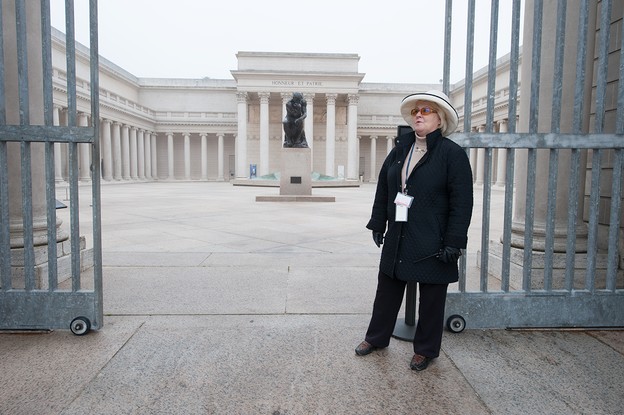
Dave: I recognize "The Thinker" in your picture (always looks like a guy on a toilet, possibly the constipated mathematician who worked out his problem with a pencil and a piece of paper), but who's the stiff in the foreground, Madame Tussaud Waxworks?
So what is it with German restaurants? Tonight for supper I decided to make "Grammer's Chicken Paprikash," from a recipe book I own called Dining in Ohio, and I began to think about all of the German restaurants I have known that have closed, Grammer's included. Grammer's Schmierkaese was the best (except for Coors' Dairy of Winton Place, which would deliver), and my great-great-grandfather's picture was included in a group photograph of the Cincinnati Maennerchor that hung on the wall in Grammer's. I've already mentioned in these pages Mecklenburg's Biergarten in Corryville, which went Asian/Hippie/Vegetarian in the late 1970s (and may now be closed -- as a result). For many years, from the early 1950s to the early 1990s [?], there was the Austrian restaurant Lenhardt's south of the University in Clifton near Hughes Corner; their list of schnitzels was amazing -- and tasty; Herr Lenhardt was a gracious host. Of course, most of Cincinnati's historic German restaurants and beer gardens closed with the advent of Prohibition.
But that was Cincinnati. I suppose Columbus's "German Village" still exists in some form; I haven't been there in years, but I'll bet it's a shadow of its former self. The famous Luchow's in New York City and its rival, the Steuben Tavern, where I spent several evenings imbibing beer and the free lunch with Jeff Rosen when he was a student at Columbia, are both long gone, as is, I suspect, Berghoff's in Chicago. Jacob Wirt's Bierstube in Boston, of enviable memory (the history of it and its sawdust-strewn floors was written by no less a connoisseur than Dr. Walter Muir Whitehill, longtime director of the Boston Athenaeum, a man known as "Old Mr. Boston" and an acquaintance of mine), still exists, but I see on its Website -- to my horror -- that it now styles itself as "Jake's" (probably to pander to Harvard and M.I.T. undergraduates with its presumed "with-it" culture).
Up in Amish and Mennonite country, around Lancaster and York and Bird-in-Hand and Intercourse, Pennsylvania, as you might expect, the so-called "German" or "Pennsylvania Dutch" eateries are mostly tourist traps, given over to ersatz German food and schmaltzlich slogans on the walls. Better to go somewhat north and east into the true Amish farmland and eat at the Stoltzfus family's several farm eateries (family style). Closer to home (mine), in Baltimore for many years there was Haussner's, a German restaurant offering glories of both food and kitsch artifacts (it had a large collection of 19th-Century "Beef Trust" paintings over its bars, as well as one of the world's largest balls of string in an upstairs dining room). It closed several years ago and no wonder: after dining there numerous times on its Hasenpfeffer mit Nudeln, the last time I had it, it was miserably prepared -- over the years, something had obviously been lost in the translation. Not so a nearby eatery, Schottzie's, a small German restaurant next to Baltimore's Shot Tower (the greatest of the few remaining shot towers in the United States), where I had the only Sauerbraten in the United States that has ever come close to that made by my grandmother; unfortunately, Schottzie's closed after about a year. Fredericksburg, Virginia, about 40 minutes south of where I live, has a new German restaurant in its restored train station; it seems pricey, and I haven't tried it yet.
Here in Washington there remain, I think, Old Europe in Georgetown, still a respectable eatery but hard to get into, Cafe Berlin on Capitol Hill where I've happily eaten in times past, and the Cafe Mozart downtown, more renowned for its pastries (and music) than its food. Then there used to be Old Budapest out on U.S. Route 50 in Fairfax, Virginia, where, when my wife and I had our last meal there, it was evident that the manager/owner and the rest of the staff were obviously fighting with each other, and where, when we ordered dessert and coffee, the waiter managed to set our tablecloth on fire! (It closed shortly thereafter.)
So my question is: what is it with German restaurants? Do Americans, as a whole, no longer care for German cuisine? (Okay, you'd be a Sour Kraut, too, if you'd lost the war!)
|





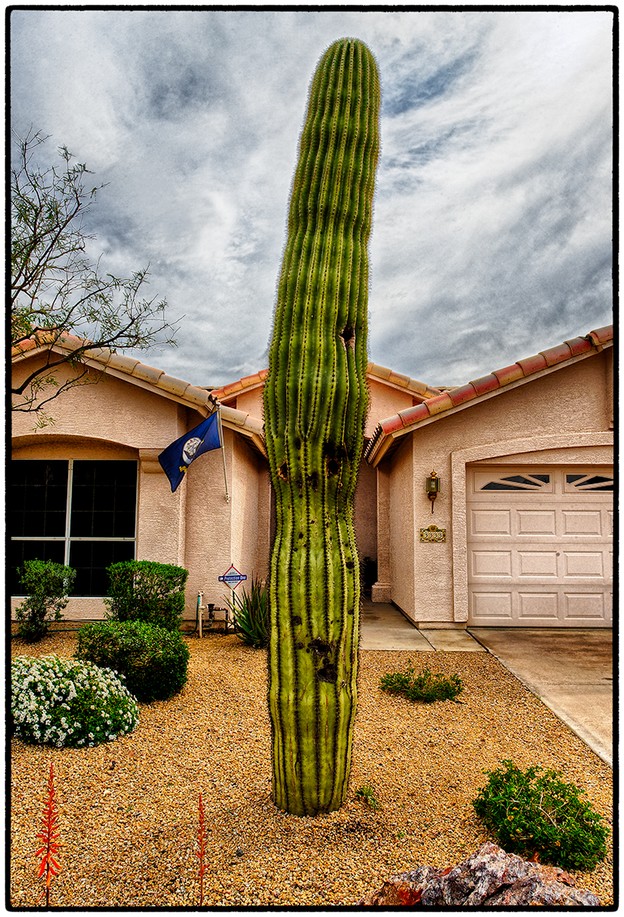
 Then, after taking this photograph I narrowly missed stepping on the most dangerous viper in North America...
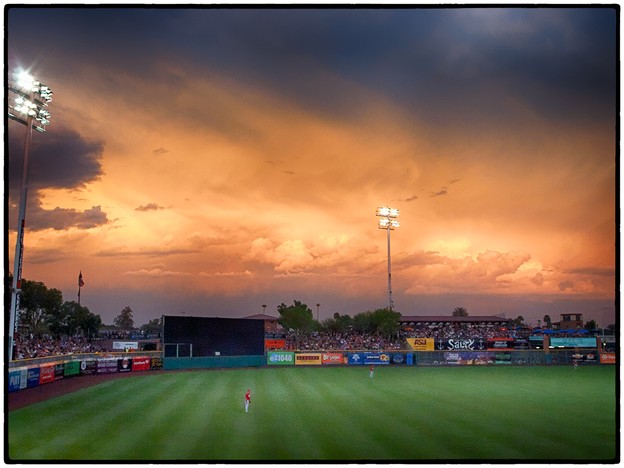
 Thankful to have survived I went to a nearby church to pray. I was puzzled that the deity behind the altar was isn't wearing the customary robe w/ halo...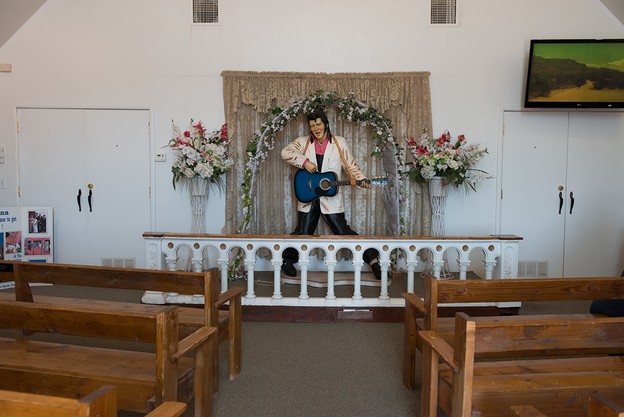
 Please feel free to expound upon any, all, or none of the above. Hello? Is it me you're looking for?